Overview
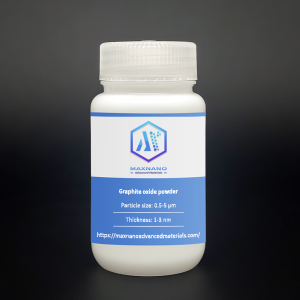
Graphene oxide (GO) is a key derivative of graphite, first identified in 1859 by chemist Benjamin Brodie at Oxford University. It is produced through the oxidation and subsequent ultrasonic exfoliation of graphite, resulting in flake-like nanomaterials with single-atom layer thickness. Composed of both sp² and sp³ hybridized carbon atoms, graphene oxide features abundant oxygen-containing functional groups—such as hydroxyl, epoxy, and carboxyl groups—that grant high hydrophilicity and excellent dispersibility in water.
Among various preparation methods—including chemical vapor deposition, solvent exfoliation, and mechanical stripping—the oxidation approach (e.g., Hummers, Brodie, or Staudenmaier methods) remains the most cost-effective and scalable. With its exceptional film-forming capability, large specific surface area, and ease of functionalization, graphene oxide holds significant potential across fields such as energy storage, biomedicine, sensors, environmental remediation, and composite materials.
Specifications
Key Features
-
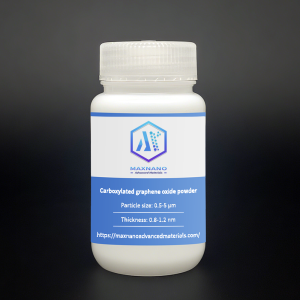
High Monolayer Content: Maintains single-layer structure with typical thickness under 1.2 nm, ensuring high surface activity and performance consistency.
-
Excellent Dispersion: Stable aqueous dispersibility facilitates mixing and composite formation with polymers and other materials.
-
Rich Surface Chemistry: Oxygen functional groups enable straightforward chemical modification and functionalization for tailored applications.
-
Tunable Functionality: Adjustable optical and electrical properties through reduction, doping, or functional group modification.
-
Abundant Active Sites: High density of reaction sites supports strong interactions with various substances.
Applications
Graphene oxide serves as a versatile material in multiple advanced technologies:
-
Electronics: Forms the basis for sensors, field-effect transistors, and flexible electronic components.
-
Energy Storage: Enhances performance in lithium-ion batteries and supercapacitors as high-surface-area electrode material.
-
Biomedicine: Enables targeted drug delivery systems and serves in biosensing and cancer therapy platforms.
-
Environmental Protection: Used in composite materials to absorb harmful gases and degrade pollutants.
-
Sensors: Functions as a fluorescence quenching material in biosensors based on fluorescence resonance energy transfer (FRET).
-
Polymer Modification: Improves mechanical and functional properties of foams and composites including PU, PLA, PP, and PMMA.
Contact Us
For further product details or technical support, please reach out to us:
sales@maxnanotech.com


Reviews
There are no reviews yet.