Overview
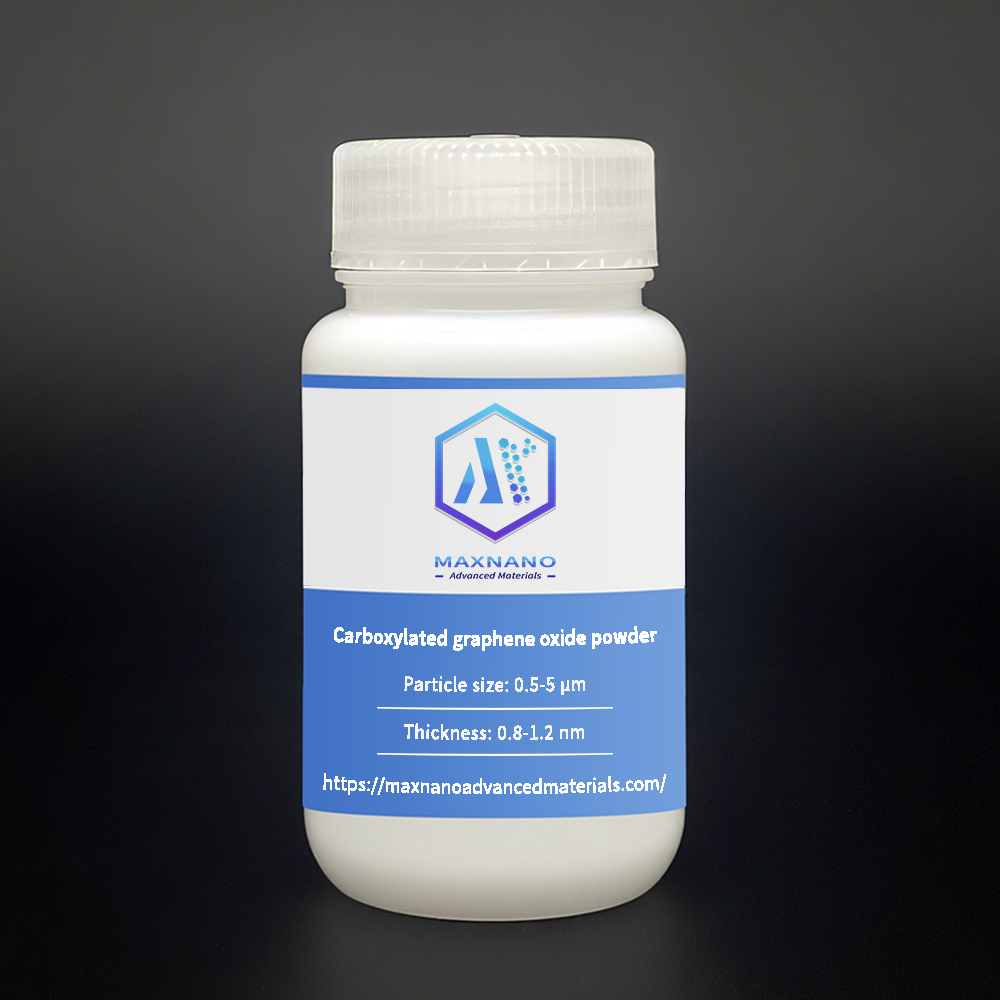
Carboxyl graphene oxide is a functionalized derivative of graphene oxide that features an enhanced concentration of carboxyl groups on its surface. Like conventional graphene oxide—first prepared in 1859 by Benjamin Brodie—it consists of atomically thin layers of carbon atoms in sp² and sp³ hybrid configurations. The presence of carboxyl, hydroxyl, and epoxy groups renders the material highly hydrophilic and readily dispersible in water and polar solvents. Produced primarily via chemical oxidation methods such as the Hummers or Brodie process, carboxyl graphene oxide combines the benefits of graphene oxide with improved reactivity and binding capacity, making it especially useful in biomedical, environmental, and electronic applications.
Specifications
Key Features
-
High carboxyl group density for enhanced chemical reactivity and biofunctionalization
-
Excellent dispersibility in aqueous and polar solvents
-
Tunable surface chemistry for covalent modification and conjugation
-
Abundant active sites facilitate integration with polymers, biomolecules, and nanoparticles
-
Adjustable optical and electronic properties through reduction or further functionalization
Applications
-
Biomedical: Drug delivery systems, targeted cancer therapy, biosensing, and tissue engineering
-
Electronics: Flexible sensors, conductive inks, thin-film transistors, and energy storage devices
-
Energy Storage: Anode material in lithium-ion batteries, supercapacitor electrodes
-
Environmental: Adsorption of heavy metals, organic pollutants, and catalytic degradation
-
Composites: Reinforcement and functionalization of polymer foams including PU, PLA, PP, and PS
Contact Information
For detailed product information or custom requirements, please contact:
Email: Sales@maxnanotech.com

Reviews
There are no reviews yet.