
Enterobacterin: Inhibition of mitochondrial respiration bradycolitis
Research topic content
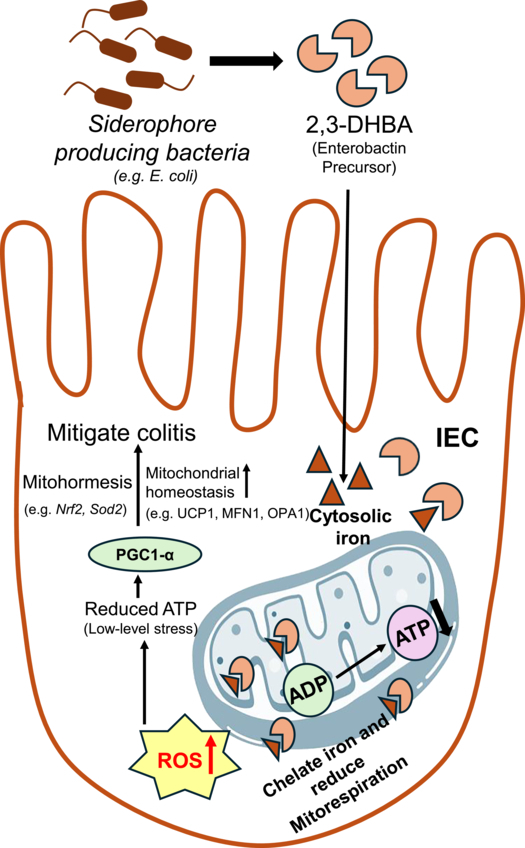
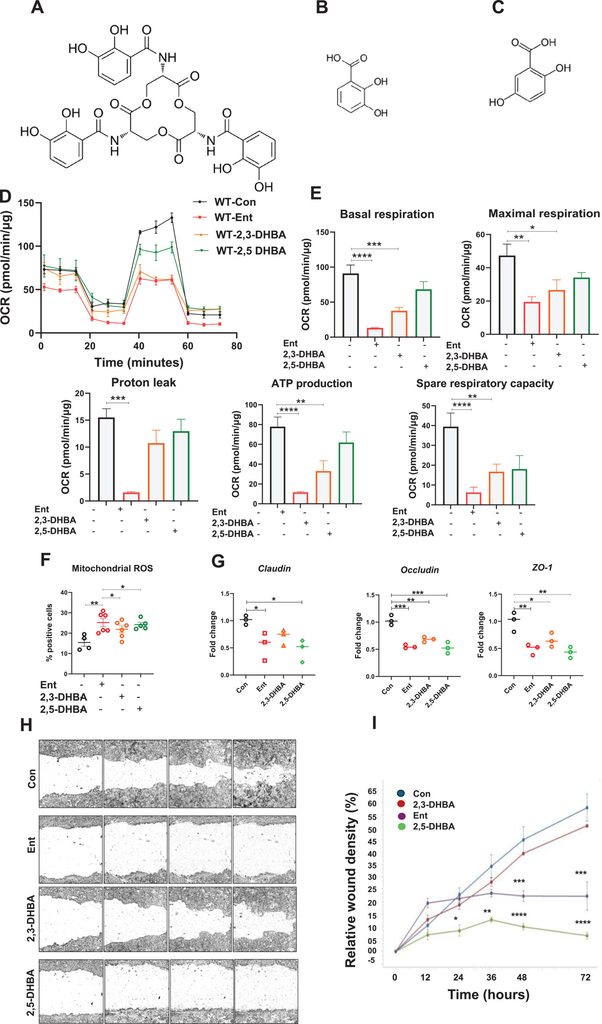
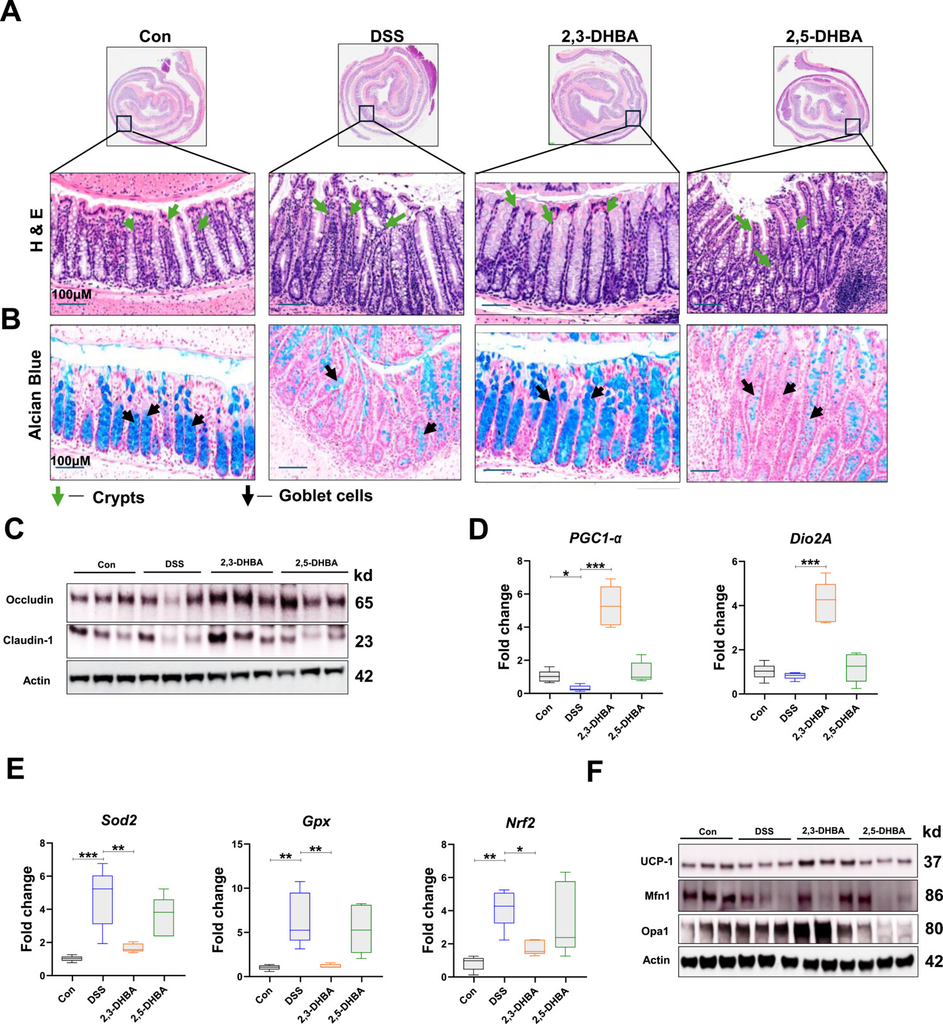
Study the effects of gut microbiota metabolite Enterobacterin (Ent) and its derivatives on mitochondrial respiration and colitis. Iron free Ent (apo Ent) can chelate iron, inhibit oxidative phosphorylation in macrophages and intestinal epithelial cells, reduce ATP production, and increase mitochondrial ROS; Iron saturated Ent or recombinant Lcn2 can reverse this inhibition. Loss of mitochondrial function in Lcn2 deficient cells can be rescued by exogenous Lcn2. Monomer 2,3-DHBA has little effect on mitochondrial respiration in vitro, but reduces inflammation, protects the intestinal barrier, restores mitochondrial biogenesis, and maintains dynamic and redox balance in DSS colitis model; 2,5-DHBA derived from mammals does not have this effect. The study proposes that the iron binding state of Ent determines its mitochondrial regulatory direction and reveals the mucosal protective effect of 2,3-DHBA.
Material innovation
This study does not involve the design of exogenous materials and belongs to the study of microbial metabolite host interaction mechanisms. Its innovation lies in revealing that Ent inhibits mitochondrial respiration in an iron chelation dependent manner; It was found that Lcn2 not only isolates Ent, but also acts as a mitochondrial metabolic protective factor; Comparing the structural isomeric effects of 2,3-DHBA and 2,5-DHBA, it is demonstrated that the hydroxyl position determines functional differentiation; Propose the concept of “mitochondrial hormone effect”, which means that mild inhibition of mitochondrial respiration can enhance cellular stress adaptation and mucosal repair.
#Research interpretation # Gut microbiota # Enterobacterin # Mitochondrial respiration # Colitis # Lcn2