
Cadherin-engineered microspheres enable scalable biofabrication of multilineage liver organoids
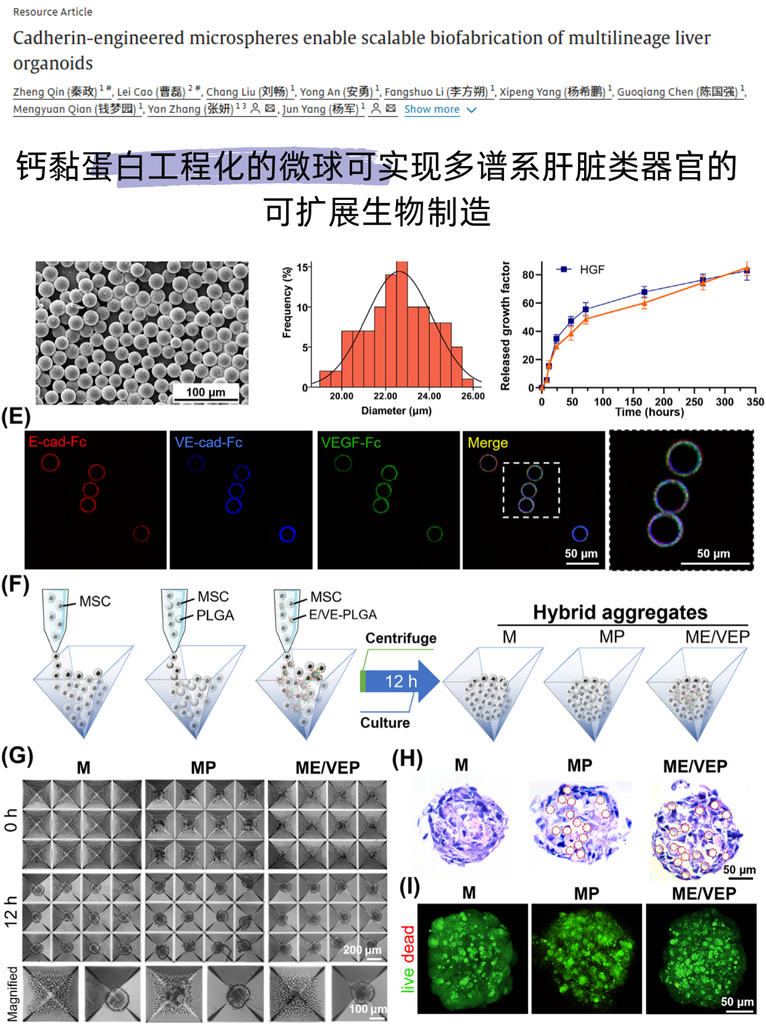
Background:
Liver organoids are promising for drug screening and regenerative medicine, but current models often rely on pluripotent stem cells or multicell cocultures. They struggle to recreate the coordinated emergence of vascular, biliary, and parenchymal compartments, and are complex, hard to scale, and heterogeneous. Mesenchymal condensation, a key developmental step, is often missing.
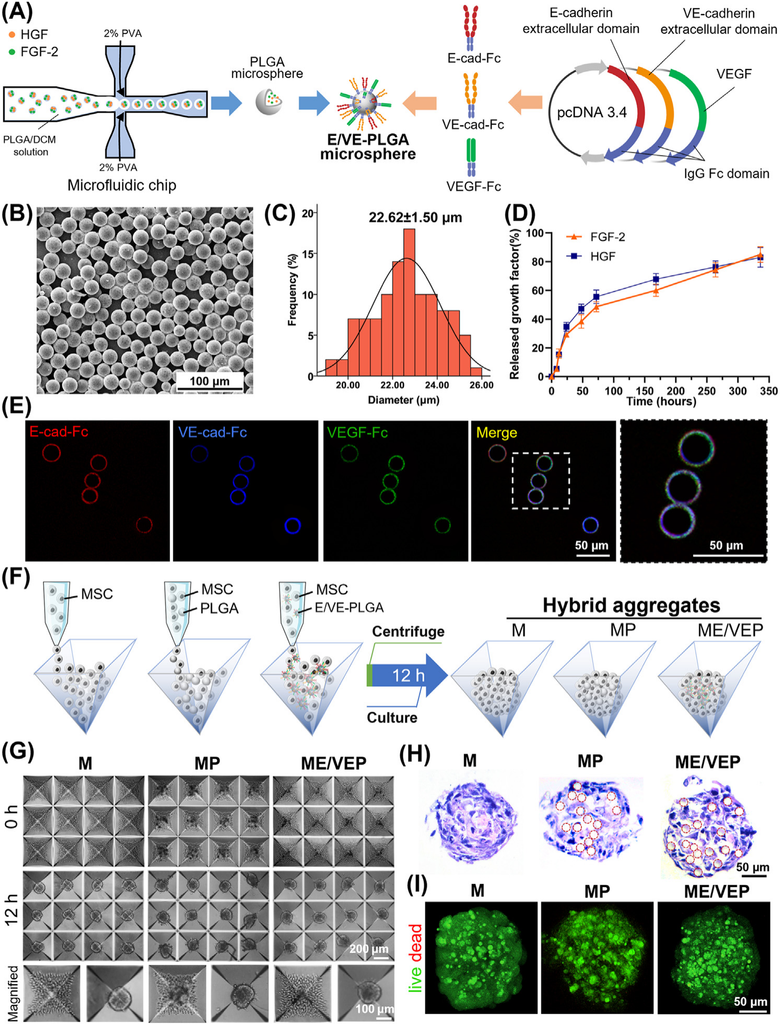
Methods and rationale:
The authors designed biodegradable PLGA microspheres displaying E-cadherin, VE-cadherin, and VEGF fusion proteins, with FGF2 and HGF released internally. The microspheres were assembled with human MSCs at a 3:1 ratio into 3D hybrid aggregates. E-cadherin first promotes cell junctions and YAP mechanotransduction, priming MSCs into a plastic state. VE-cadherin plus VEGF then builds an endothelial niche, guiding hepatoblasts toward hepatocyte and cholangiocyte fates.
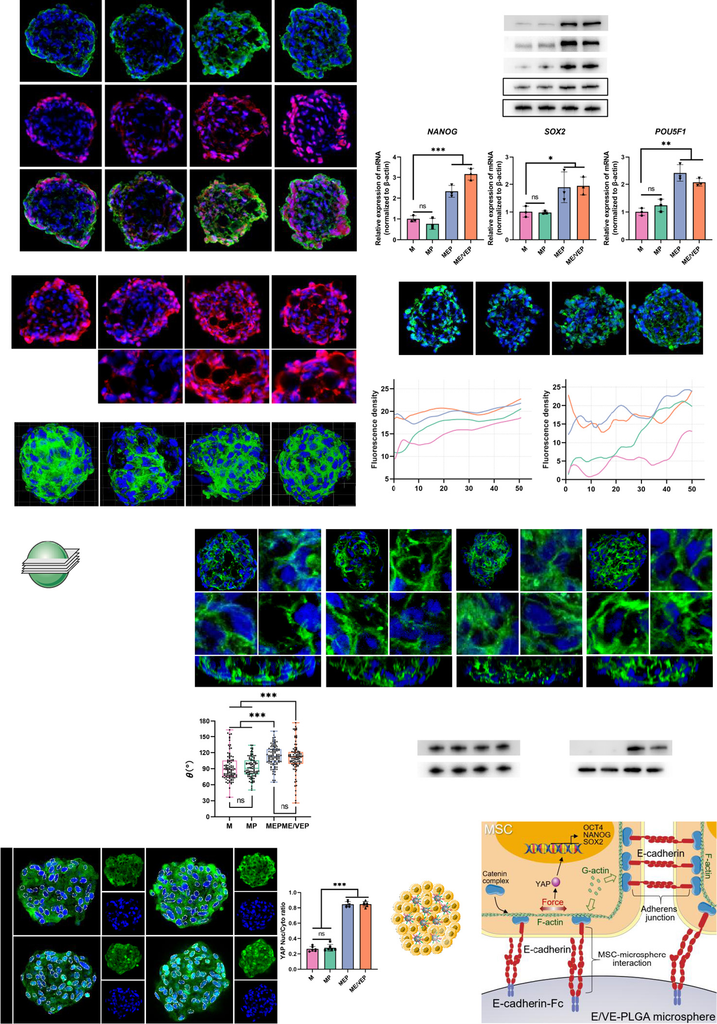
Results:
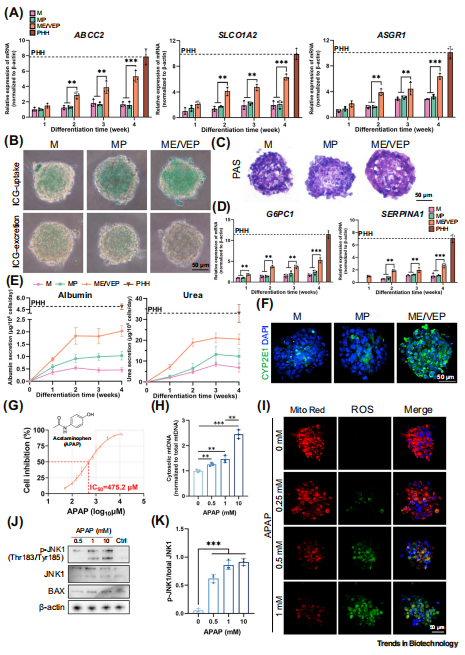
After 14 days, the microspheres largely degraded, and organoids showed hepatocyte, cholangiocyte, endothelial, and mesenchymal compartments. Single-cell RNA sequencing revealed four cell populations, with JAG1-NOTCH2 signaling involved in biliary fate. Functionally, the organoids took up and cleared ICG, stored glycogen, and secreted albumin and urea, reaching about 55% of primary human hepatocyte levels by week 4. CYP2E1 and CYP3A4 were elevated. APAP and INH caused dose-dependent toxicity, with increased ROS, mtDNA release, p-JNK, and BAX. Technology readiness is around TRL 4-5.
Note: This is only a frontier science share and does not constitute any related advice.
#LiverOrganoids #Biomaterials #Microspheres #MSCs #DrugHepatotoxicity #TrendsInBiotechnology #ScienceFrontier #RegenerativeMedicine
DOI: 10.1016/j.tibtech.2026.03.014