
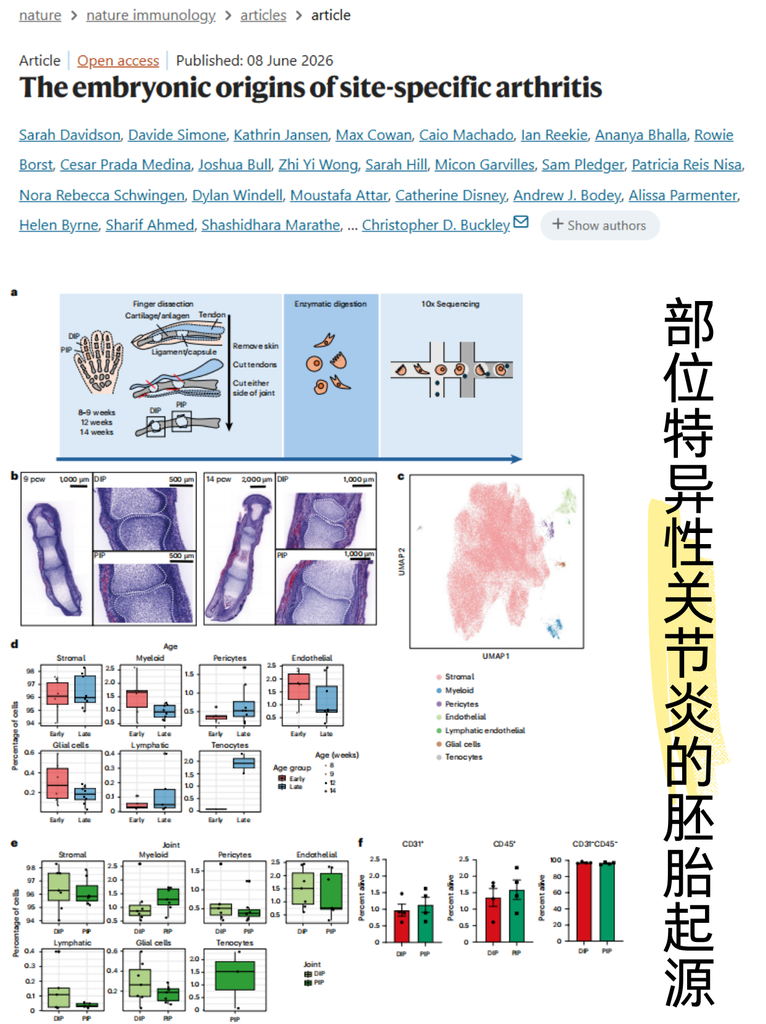
The embryonic origins of site-specific arthritis
Background–arthritis
In human fingers, proximal interphalangeal joints are more prone to inflammation, while distal interphalangeal joints are often spared. The cellular basis for this site preference remains unclear. Synovial fibroblasts shape joint microenvironments, and fetal development offers a window to see how positional identity is established. This study asks whether mesenchymal composition and spatial structure laid down before birth set up later susceptibility. Target direction: local fibroblast niches, not only systemic immune activation.
Innovation–arthritis
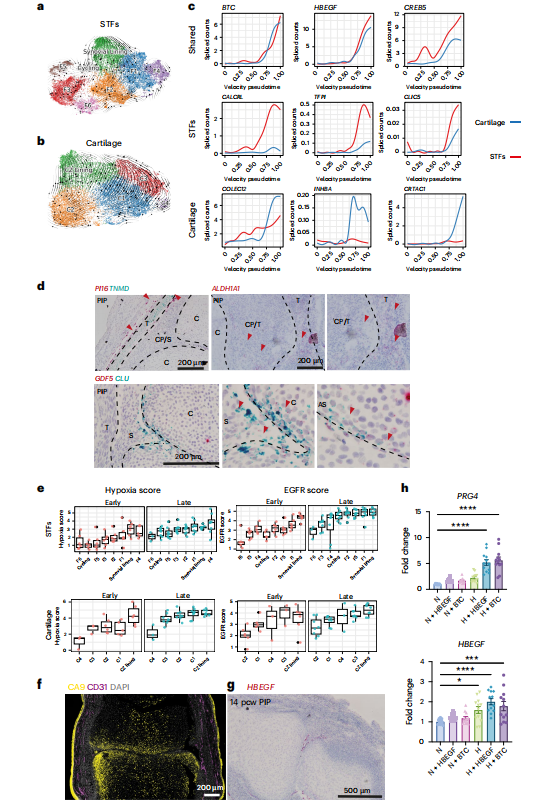
Combining single-cell RNA sequencing, imaging, and X-ray tomography, the work maps fetal finger joints. Proximal interphalangeal joints show larger synovial volume and enrichment of PI16+ universal fibroblasts. These cells sit in perivascular regions and at developing tendon-ligament interfaces. Cytokine stimulation reveals shared and cell-type-specific responses, suggesting location plus transcription together promote inflammation. The key idea is that in utero mesenchymal stoichiometry, especially PI16+ fibroblasts, drives tissue susceptibility. Target direction: PI16+ fibroblasts and their interface microenvironment.
Materials Research–arthritis
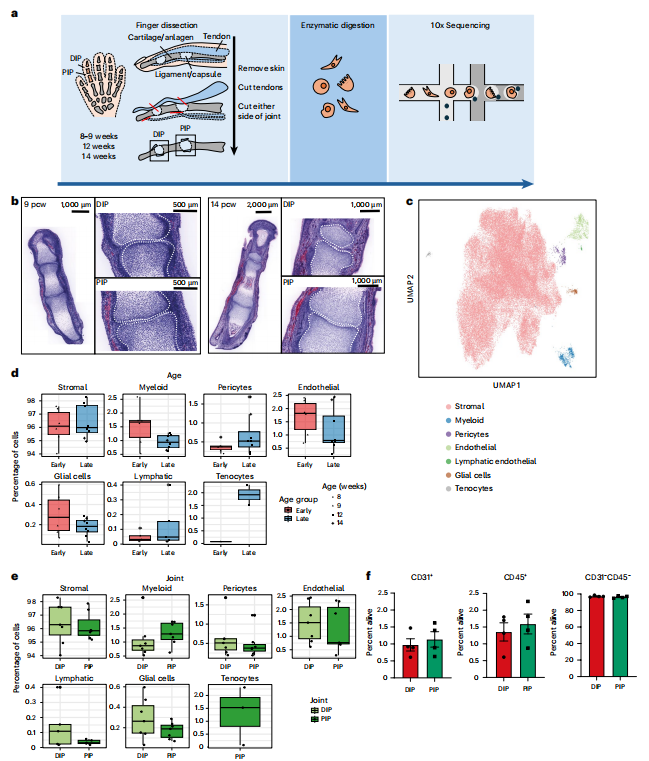
Fetal human finger joints at 8–14 postconception weeks were profiled. Single-cell sequencing captured 65,705 cells; flow cytometry validated major populations. Immunofluorescence and RNAscope localized key markers. Synchrotron X-ray tomography reconstructed synovial and tendon structures. In vitro, CD34+PI16+ and CD34−PI16− fibroblasts were sorted and stimulated with TNF and IL-1β, followed by bulk RNA-seq. MuSpAn spatial analysis assessed cell relationships. Target direction: PI16+ cells at vascular and tendon-ligament boundaries.
Note: This is only a frontier update and does not constitute any related advice.
#FrontierResearch #SingleCellSequencing #SpatialTranscriptomics #EmbryonicDevelopment #Fibroblasts #TissueMicroenvironment #TargetedResearch #JointDevelopment