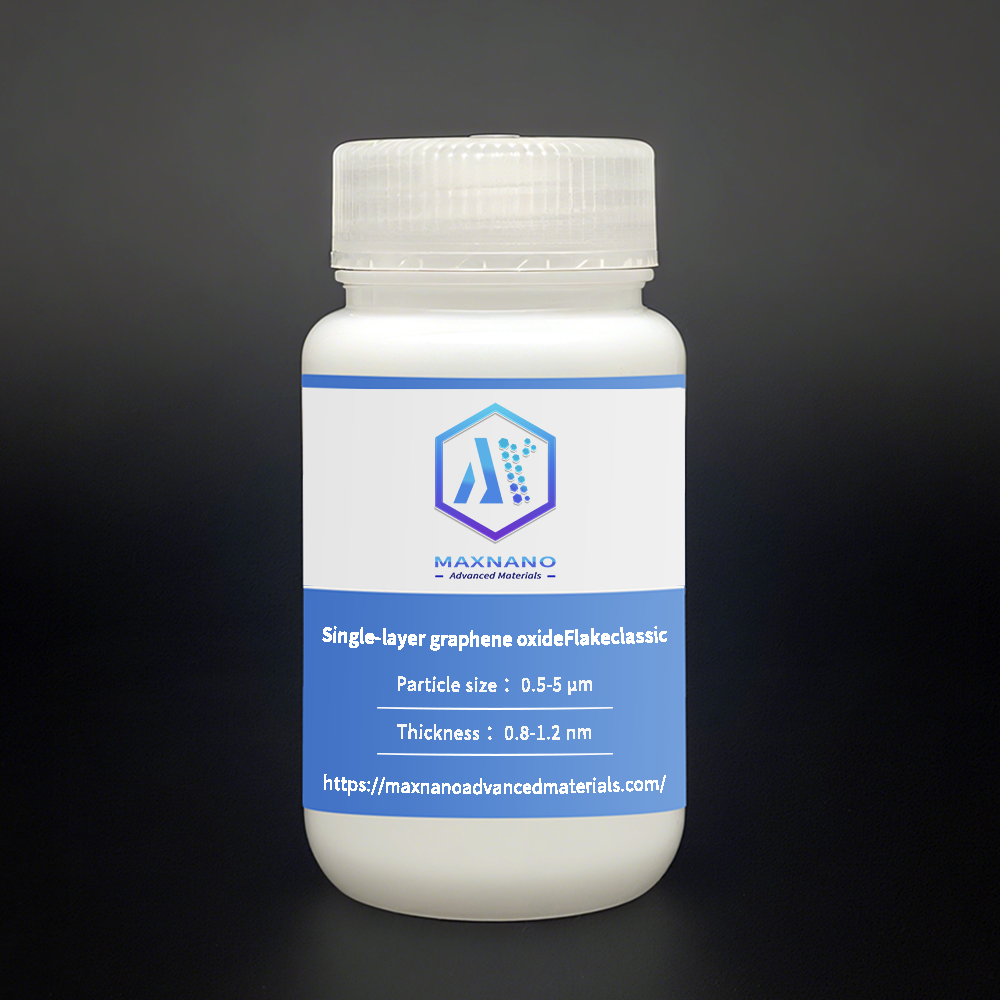
Overview
Graphene oxide (GO) is a key derivative of graphite, first identified in 1859 by chemist Benjamin Brodie at Oxford University. It is produced through the oxidation and subsequent ultrasonic exfoliation of graphite, resulting in flake-like nanomaterials with single-atom layer thickness. Composed of both sp² and sp³ hybridized carbon atoms, graphene oxide features abundant oxygen-containing functional groups—such as hydroxyl, epoxy, and carboxyl groups—that grant high hydrophilicity and excellent dispersibility in water.
Specifications
-
Form: Flake-type powder
-
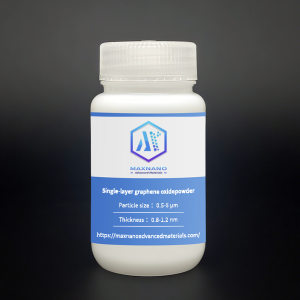
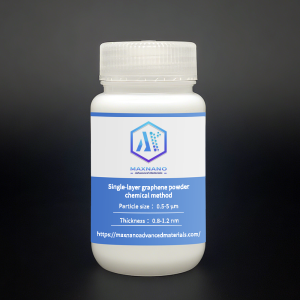
Diameter: 0.5–5 μm
-
Thickness: 0.8–1.2 nm
-
Purity: ~99% (via EDS testing)
-
Monolayer Ratio: >99%
Key Features
-
High Monolayer Content: Maintains single-layer structure with typical thickness under 1.2 nm, ensuring high surface activity and performance consistency.
-
Excellent Dispersion: Stable aqueous dispersibility facilitates mixing and composite formation with polymers and other materials.
-
Rich Surface Chemistry: Oxygen functional groups enable straightforward chemical modification and functionalization for tailored applications.
-
Tunable Functionality: Adjustable optical and electrical properties through reduction, doping, or functional group modification.
-
Abundant Active Sites: High density of reaction sites supports strong interactions with various substances.
Applications
Graphene oxide serves as a versatile material in multiple advanced technologies:
-
Electronics: Forms the basis for sensors, field-effect transistors, and flexible electronic components.
-
Energy Storage: Enhances performance in lithium-ion batteries and supercapacitors as high-surface-area electrode material.
-
Biomedicine: Enables targeted drug delivery systems and serves in biosensing and cancer therapy platforms.
-
Environmental Protection: Used in composite materials to absorb harmful gases and degrade pollutants.
-
Sensors: Functions as a fluorescence quenching material in biosensors based on fluorescence resonance energy transfer (FRET).
-
Polymer Modification: Improves mechanical and functional properties of foams and composites including PU, PLA, PP, and PMMA.
Contact Us
For further product details or technical support, please reach out to us:
sales@maxnanotech.com


Reviews
There are no reviews yet.