
Multifunctional Biomimetic Trojan Horse Nanosystem for Remodeling Infected Regenerative Microenvironments in Osteoporotic Bone Defects
Bone Defects Background
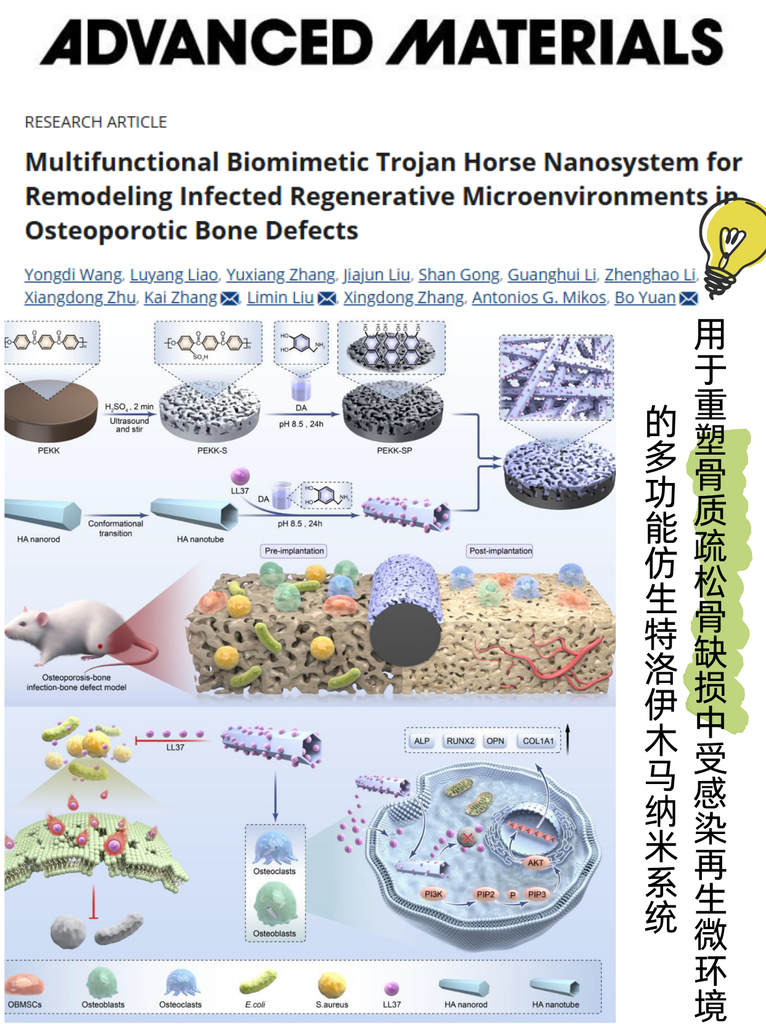
As populations age, osteoporotic bone defects often coexist with bacterial infection. Drug-resistant bacteria and intracellular escape make conventional implants less effective at the interface. Systemic drug delivery may bring resistance, microbial disturbance, and unstable implant integration. What is needed is an interface material that can target extracellular bacteria, intracellular bacteria, and the osteoporotic regenerative niche at the same time. This work focuses on infected osteoporotic bone defects, where weakened immunity and impaired bone metabolism create a harsh local microenvironment. The goal is to combine bacterial targeting with bone-site targeting, so that antibacterial action and osteogenic regulation are not separated but integrated on the implant surface. The authors use a biomimetic Trojan horse nanosystem to address this gap.
Innovation
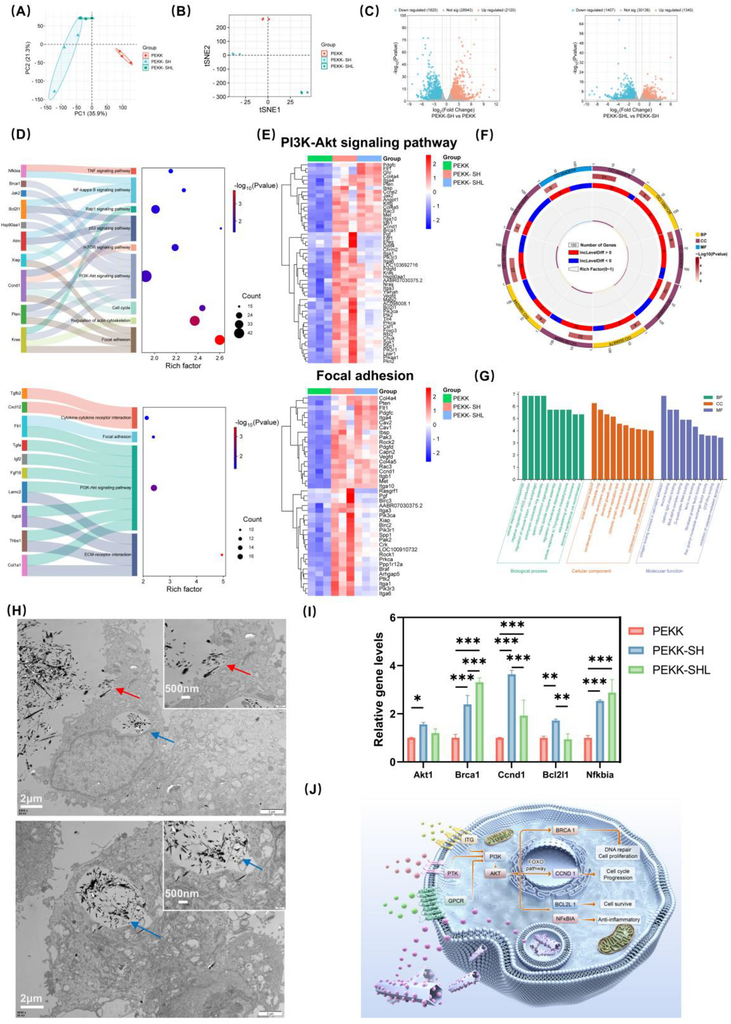
Hydroxyapatite is reshaped from solid rods into hollow nanotubes, creating a Trojan horse carrier for LL37. Surface-adsorbed antimicrobial peptides release first to target extracellular bacteria. The nanotubes are then internalized by osteoporotic bone marrow mesenchymal stem cells, where encapsulated peptides are released to target intracellular bacteria. After cargo release, NT-HA modulates the PI3K-AKT signaling cascade and promotes directed osteogenic differentiation of OBMSCs. This design links bacterial targeting, intracellular delivery, and osteoporotic niche regulation in one platform. It also avoids relying only on systemic drugs. The key targeting direction is sequential: extracellular infection first, intracellular infection next, then the osteoporotic bone regenerative microenvironment. This dual-stage delivery strategy gives the implant surface a more precise role in infected osteoporotic bone defects.
Materials
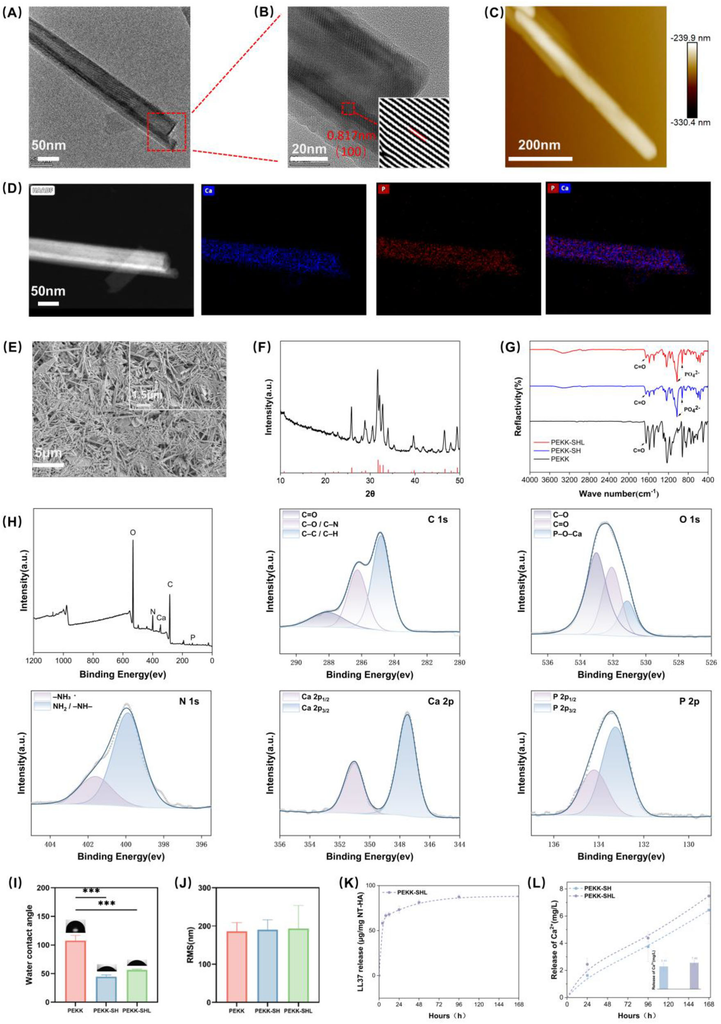
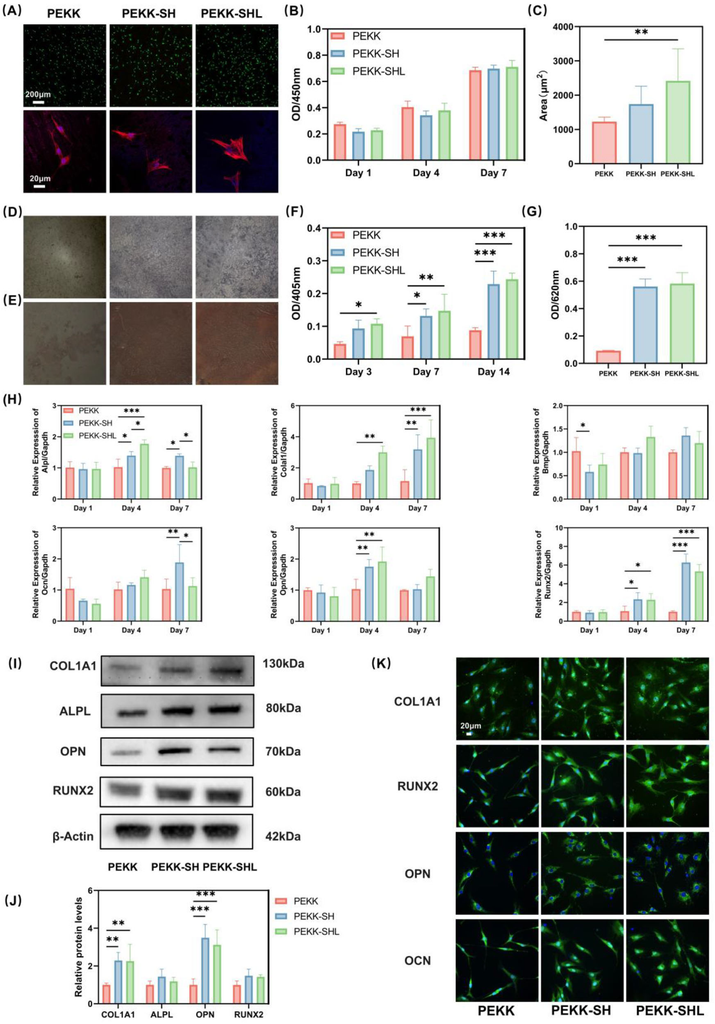
NT-HA shows a hollow nanotube structure, about 500 nm in length and 10–50 nm in diameter, with low crystallinity. Dopamine self-polymerization anchors NT-HA and LL37 onto sulfonated PEKK, forming PEKK-SHL. LL37 and Ca²⁺ show sustained release, while surface hydrophilicity and cytocompatibility improve. In vitro, the system targets Staphylococcus aureus and Escherichia coli, and also reduces intracellular bacteria in infected OBMSCs. Transcriptomics links NT-HA to PI3K-AKT signaling and osteogenic markers such as RUNX2, COL1A1, ALPL, and OPN. In a rat femoral condyle model with osteoporotic infection, PEKK-SHL shows tighter osseointegration, more peri-implant bone, and stronger mechanical properties. The material thus targets both the infectious niche and the osteoporotic regenerative microenvironment.
Note: This is only a frontier update sharing and does not constitute any related advice.
Contact Us:E-mail:mxenes@163.com