
Graphene hBN Moiré Superlattice Membranes: A Breakthrough in 2D Nanomaterials Engineering
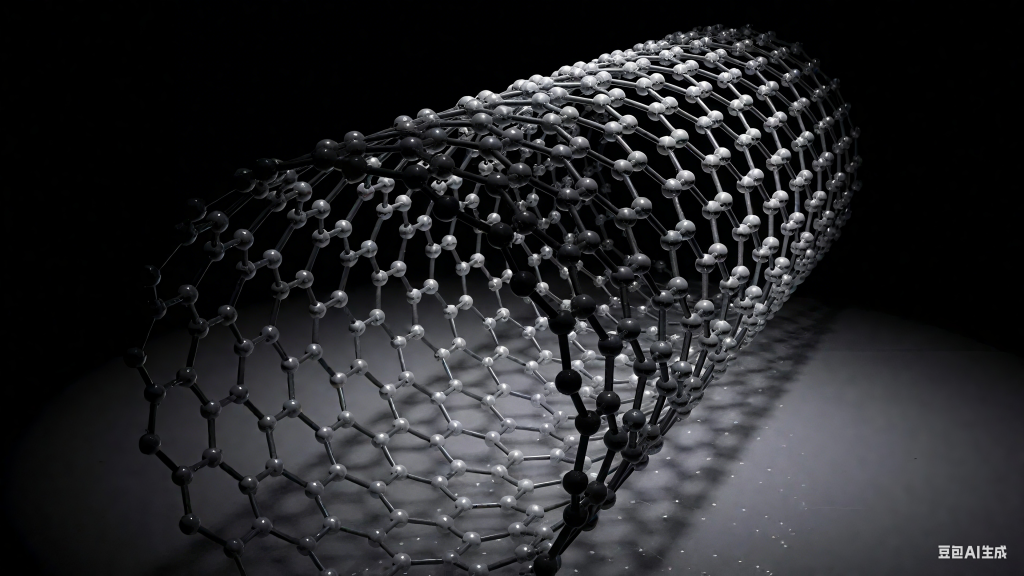
Understanding Graphene hBN Moiré Superlattice Membranes
Graphene hBN Moiré Superlattice Membranes are formed by vertically stacking monolayer graphene with monolayer hexagonal boron nitride. Due to a slight lattice mismatch and rotational alignment between the two layers, a periodic moiré pattern emerges at the interface. This superlattice structure creates new mechanical and physical behaviors that are not present in either material alone.
Graphene is renowned for its extraordinary tensile strength and electrical conductivity, while hBN offers excellent thermal stability, chemical inertness, and insulating properties. When combined through van der Waals interactions, the resulting membrane exhibits synergistic performance far beyond conventional 2D stacks.
Breakthrough Research from Peking University
A research team led by Academician Zhongfan Liu at Peking University recently reported a landmark achievement in Advanced Materials. The team successfully fabricated graphene hBN moiré superlattice membranes that simultaneously exhibit high strength and high toughness, addressing the long-standing “strength–toughness trade-off” that has limited practical use of many 2D materials.
Experimental testing showed that the membranes retained over 95% structural integrity after 200 extreme thermal cycles, including rapid heating up to 1800 K and cooling rates exceeding 10⁴ K/s. This level of thermal durability represents a substantial improvement over previously reported ultrathin membranes.
Why Graphene hBN Moiré Superlattice Membranes Work
The success of graphene hBN moiré superlattice membranes lies in their interfacial mechanics. Graphene, while exceptionally strong, typically fails in a brittle manner once microcracks form. In contrast, hBN has an asymmetric lattice structure that naturally deflects and slows crack propagation.
When cracks initiate in the graphene layer, the adjacent hBN layer redistributes stress and alters crack trajectories. This crack-deflection mechanism dissipates energy and delays catastrophic failure. As a result, the membrane achieves an optimal balance between stiffness and damage tolerance—something neither material can accomplish alone.
Mechanical and Thermal Advantages
The moiré superlattice structure provides multiple performance advantages:
-
Exceptional tensile strength inherited from graphene
-
Enhanced fracture resistance due to hBN crack-arrest behavior
-
Outstanding thermal stability under extreme temperature gradients
-
Resistance to fatigue under repeated thermal and mechanical cycling
These combined properties make graphene hBN moiré superlattice membranes particularly attractive for environments where both strength and reliability are critical.
Broader Impact on 2D Material Design
Beyond graphene and hBN, the design concept behind graphene hBN moiré superlattice membranes can be extended to a wide range of 2D heterostructures. Potential material combinations include:
-
MoS₂/graphene superlattices
-
AlN/graphene heterostructures
-
hBN-based multilayer membranes
This general strategy provides a new pathway for engineering mechanical performance through lattice design rather than chemical modification alone.
Potential Applications of Graphene hBN Moiré Superlattice Membranes
Thanks to their unique combination of strength, toughness, and thermal stability, graphene hBN moiré superlattice membranes may enable applications such as:
-
High-temperature protective coatings
-
Flexible micro-electromechanical systems (MEMS)
-
High-strength filtration and separation membranes
-
Aerospace and extreme-environment sensors
-
Next-generation flexible electronics
In each case, reliability under mechanical and thermal stress is a decisive factor—one that these membranes are uniquely positioned to address.
Future Research Directions
Future studies on graphene hBN moiré superlattice membranes are expected to focus on large-area fabrication, defect control, and integration with existing manufacturing processes. Understanding how twist angle, lattice mismatch, and interlayer coupling influence macroscopic performance will be critical for scaling these materials beyond laboratory demonstrations.
Conclusion
In conclusion, graphene hBN moiré superlattice membranes represent a significant step forward in the rational design of high-performance 2D materials. By overcoming the traditional strength–toughness trade-off, this breakthrough opens new opportunities for reliable ultrathin materials in extreme environments. As research continues to explore and refine moiré-engineered structures, these membranes are likely to play a central role in the next generation of nanomaterials and advanced engineering systems.
The work was published in Advanced Materials.