
7 Breakthroughs in MXene–Graphene Oxide Hybrid Coatings for Ultra-Low Friction Applications
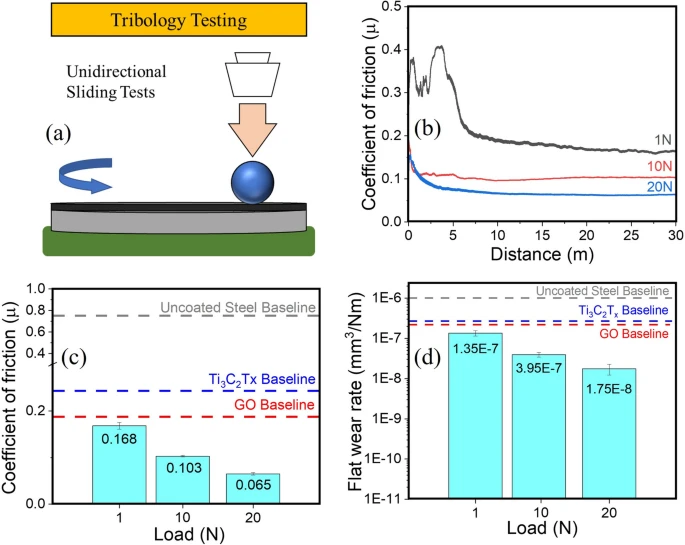
Tribological testing using a ball-on-disc configuration shows that MXene graphene oxide hybrid coatings achieve an ultra-low coefficient of friction as low as 0.065 under a contact pressure of 1 GPa at a sliding speed of 100 mm/s. This value significantly outperforms many state-of-the-art solid lubricants operating under similar ambient conditions.
The friction behavior remains stable over extended sliding distances, highlighting the coating’s durability under sustained mechanical stress.
Wear Resistance and Surface Protection
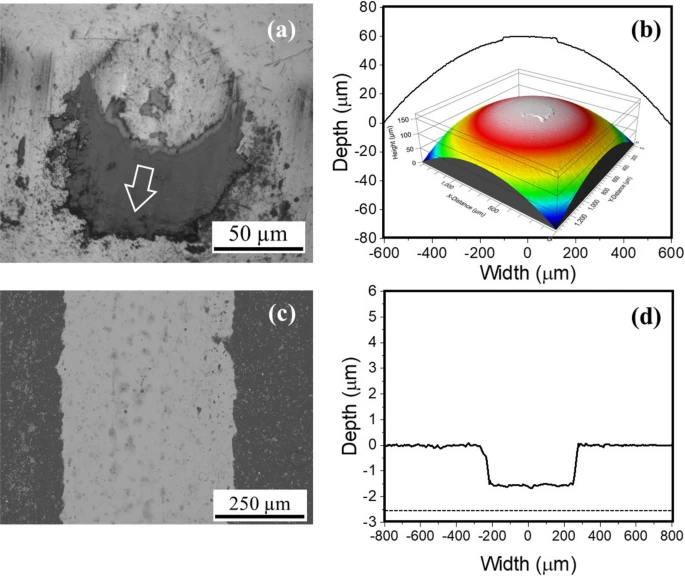
In addition to friction reduction, MXene graphene oxide hybrid coatings provide exceptional wear protection for both the steel substrate and the counterface. Wear rate measurements indicate a dramatic reduction compared to uncoated steel, while post-test surface analysis shows minimal material transfer and surface damage.
Lubrication Mechanism of MXene Graphene Oxide Hybrid Coatings
Formation of a Dense Tribofilm
The outstanding performance of MXene graphene oxide hybrid coatings originates from the in situ formation of a dense, hard tribofilm during sliding. Nanoindentation results reveal that this tribofilm exhibits enhanced hardness compared to the as-deposited coating.
At the atomic level, surface terminations on MXene nanosheets interact with graphene oxide layers to form saturated dangling bonds. This chemically stable interface minimizes adhesive interactions and sustains low shear strength during sliding.
Stability Under Ambient Conditions
Unlike moisture-sensitive lubricants, MXene graphene oxide hybrid coatings maintain stable friction behavior under varied climatic conditions, including changes in humidity and temperature. This stability is essential for real-world industrial deployment, where environmental control is often impractical.
Industrial Implications and Application Potential
The demonstrated combination of ultra-low friction, high load-bearing capacity, and scalable processing positions MXene graphene oxide hybrid coatings as strong candidates for demanding applications such as:
-
Rolling and sliding bearings
-
Automotive and aerospace components
-
Heavy-duty industrial machinery
-
Energy and manufacturing equipment
For readers interested in broader surface engineering strategies, related research on advanced ceramic and composite coatings can be found in our internal guide on industrial surface protection technologies
From a broader research perspective, tribology studies published by organizations such as Elsevier’s Tribology International provide valuable external context on emerging solid lubricant systems
From a broader research perspective, extensive studies on advanced solid lubrication systems and surface engineering strategies have been published in leading tribology journals such as Tribology International, providing valuable context for the performance mechanisms of MXene–graphene oxide hybrid coatings.
https://www.sciencedirect.com/journal/tribology-international
Conclusion: A New Paradigm for Solid Lubrication
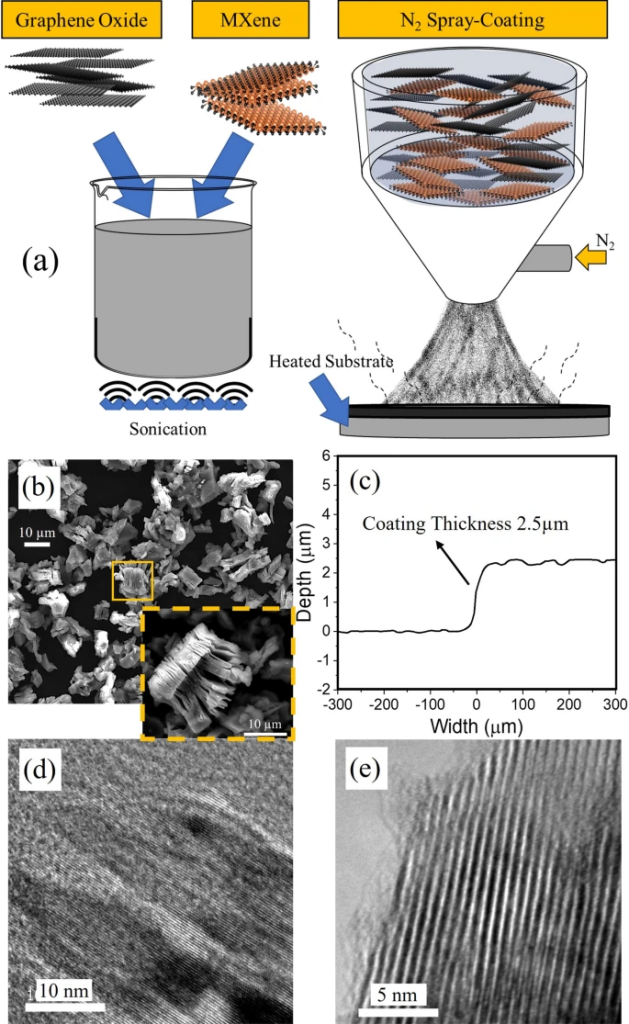
In summary, MXene graphene oxide hybrid coatings represent a significant advancement in solid lubrication technology for high-load industrial applications. By leveraging the synergistic interaction between MXene nanosheets and graphene oxide layers, these coatings deliver ultra-low friction, exceptional wear resistance, and robust environmental stability.
Equally important, the ability to fabricate these coatings using simple spray-coating methods bridges the gap between laboratory research and industrial implementation. As surface engineering continues to evolve, MXene graphene oxide hybrid coatings offer a scalable, high-performance solution that sets a new benchmark for next-generation solid lubricants.