
Reprogramming Sphingolipid Metabolic and Redox Homeostasis with an Injectable Botanicals/Nanozymes Hydrogel for Inhibiting Postoperative Recurrence and Metastasis in Breast Cancer
Background:
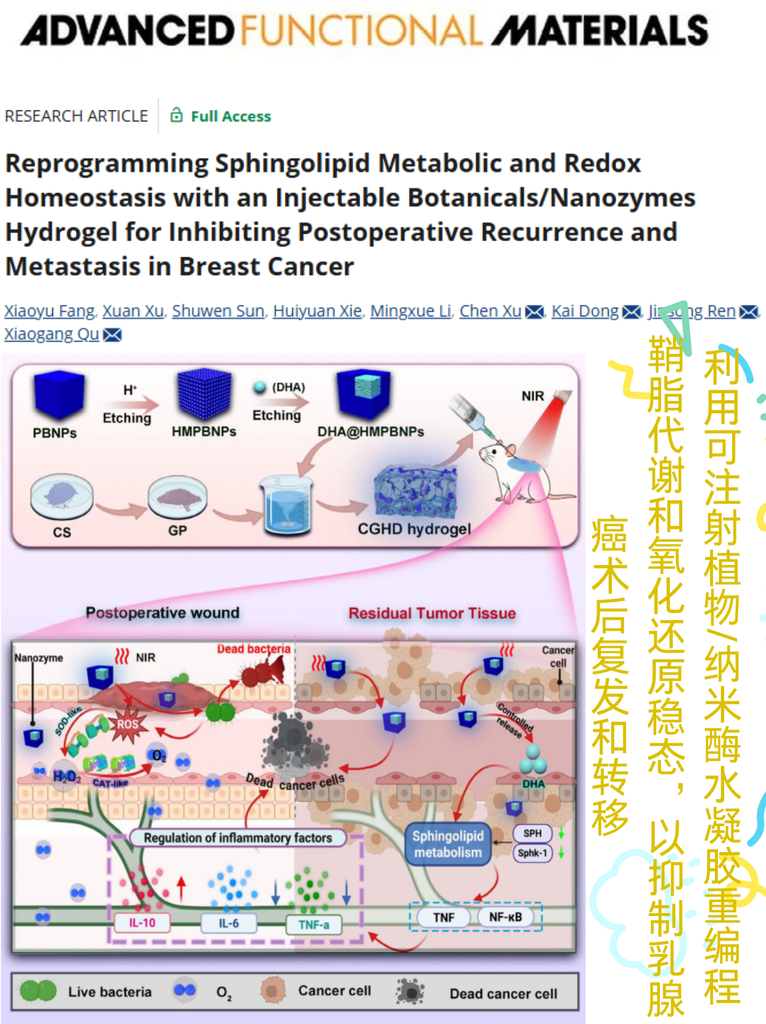
Residual lesions after breast cancer surgery are prone to recurrence and metastasis, driven primarily by a vicious cycle of oxidative stress and sphingolipid metabolic imbalance. Excessive reactive oxygen species not only damage cellular components but also activate sphingosine kinase-1, promoting the release of pro-inflammatory cytokines and constructing a microenvironment conducive to tumor regeneration. Current antioxidant strategies struggle to achieve sustained stability, necessitating a new breakthrough at the level of metabolic regulation to suppress inflammation while repairing tissue and blocking the postoperative recurrence chain.
Research Innovation:
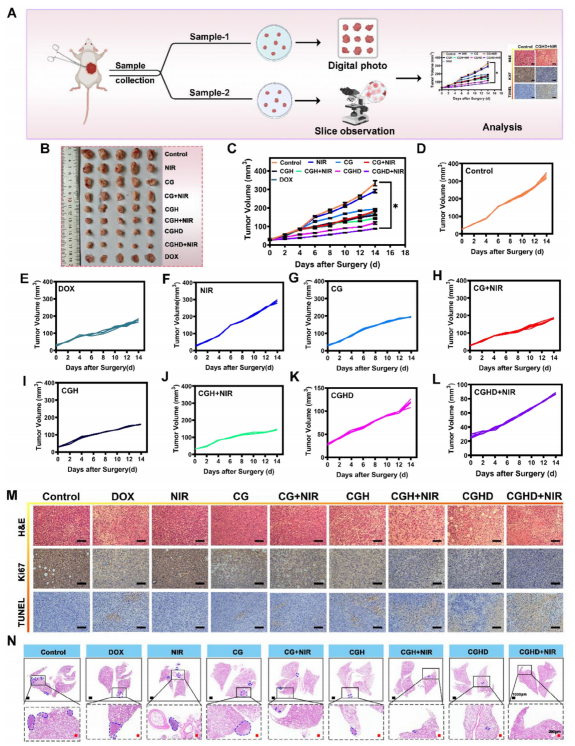
This study moves beyond the traditional approach of merely scavenging reactive oxygen species, shifting toward precise reprogramming of sphingolipid metabolism. An injectable thermosensitive hydrogel loaded with dihydroartemisinin and hollow mesoporous Prussian blue nanozymes enables on-demand release triggered by near-infrared light. By downregulating sphingosine and sphingosine kinase-1, the system inhibits the NF-κB and TNF inflammatory pathways, reshapes redox homeostasis, and converts the postoperative wound microenvironment from tumor-promoting to tumor-suppressing, offering a novel metabolic targeting paradigm for comprehensive postoperative intervention.
Materials Research:
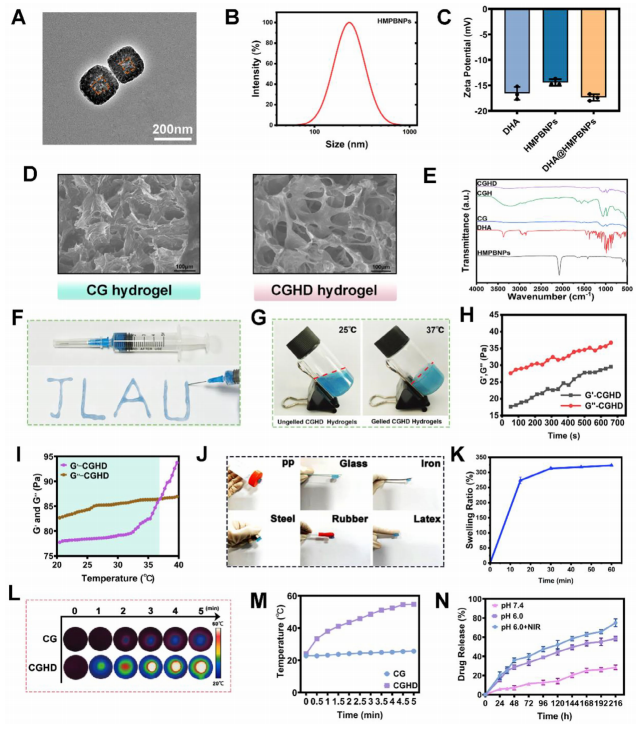
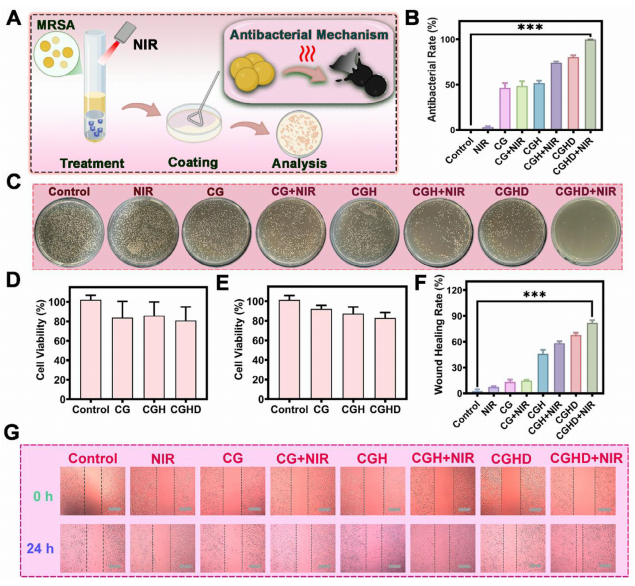
The CGHD hydrogel is constructed from a chitosan thermosensitive matrix, hollow mesoporous Prussian blue nanozymes, and dihydroartemisinin. The nanozymes possess superoxide dismutase- and catalase-like activities, enabling cascade scavenging of reactive oxygen species; the hollow structure enhances drug loading capacity, and photothermal effects under near-infrared irradiation promote drug release. The gel rapidly forms at body temperature with strong adhesion, can fill irregular wounds and sustain drug release, and combines antibacterial and pro-healing functions, adapting to dynamic postoperative wounds.
Note: This article is for frontier updates sharing only and does not constitute any related advice.
#BreastCancerPostoperative #NanozymeHydrogel #SphingolipidMetabolism #OxidativeStress #ResearchFrontiers