
Biomedical Nanotechnology: Advancing Precision Materials for Medicine
Introduction
Biomedical nanotechnology focuses on the design and application of nanoscale materials that interact safely and effectively with biological systems. By controlling particle size, surface chemistry, and material purity at the nanometer scale, biomedical nanotechnology enables breakthroughs across drug delivery, medical imaging, diagnostics, implant engineering, and regenerative medicine.
Unlike conventional bulk materials, nanomaterials exhibit enhanced surface activity, improved bioavailability, and tunable biological responses. These characteristics make biomedical nanotechnology a critical foundation for next-generation medical research and clinical technologies.
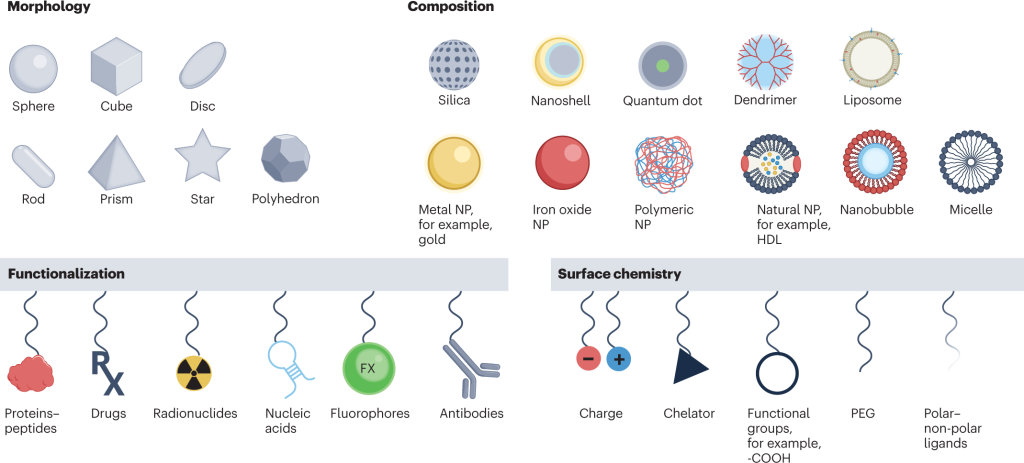
Precision Drug Delivery: Targeted Therapy at the Nanoscale
One of the most impactful applications of biomedical nanotechnology lies in precision drug delivery. Traditional drug administration often distributes active compounds throughout the entire body, leading to low efficiency and unwanted side effects.
Nanocarriers such as liposomes, polymeric nanoparticles, silica nanospheres, and inorganic nanostructures protect therapeutic agents during circulation and release them at specific target sites. Through surface functionalization, nanoparticles can recognize and bind to receptors expressed only on diseased cells, such as tumor tissues or inflamed regions.
This targeted strategy improves drug absorption, reduces dosage requirements, and minimizes toxicity to healthy tissue. As a result, biomedical nanotechnology significantly enhances treatment accuracy in oncology, immunotherapy, and chronic disease management.
Biomedical Nanotechnology in Imaging and Diagnostics
Advanced medical imaging has also benefited greatly from biomedical nanotechnology. Nanomaterials serve as high-performance contrast agents in imaging modalities including MRI, CT, PET, and fluorescence imaging.
Quantum dots provide strong and stable fluorescence signals, while magnetic nanoparticles enhance contrast sensitivity in MRI scans. Gold and silica-based nanostructures enable precise optical imaging at the cellular level, supporting early disease detection.
In diagnostic systems, nanosensors and nanoparticle-based assays improve detection limits for biomarkers, pathogens, and genetic signals. Some nanomaterials combine imaging and therapeutic functions, enabling real-time monitoring of treatment progress within the body.
Nature Biomedical Nanotechnology Collection
Implant Coatings and Regenerative Medicine Applications
In regenerative medicine, biomedical nanotechnology contributes to improved implant performance and tissue repair. Nanostructured coatings applied to orthopedic and dental implants enhance biocompatibility, reduce bacterial adhesion, and promote tissue integration.
Nanofiber scaffolds mimic the body’s extracellular matrix, guiding cell attachment, proliferation, and differentiation. These materials support bone regeneration, wound healing, and soft tissue repair with improved structural stability.
By closely matching biological environments at the nanoscale, biomedical nanotechnology helps implants achieve longer service life and better functional outcomes.
Material Quality, Safety, and Industrial Challenges
Despite its advantages, biomedical nanotechnology must overcome strict material and regulatory challenges. Nanomaterials used in medical applications must demonstrate high purity, chemical stability, reproducibility, and controlled biodegradability.
Scalable manufacturing remains a key hurdle, as maintaining nanoscale precision during mass production is technically demanding. In addition, regulatory approval requires extensive safety evaluation, including toxicity, biodistribution, and long-term biological effects.
At ZHILI Nanomaterials, biomedical-grade nanomaterials undergo rigorous purity control, structural characterization, and stability testing to meet research and medical application standards. These processes ensure consistency from laboratory development to industrial supply.
Future Outlook of Biomedical Nanotechnology
As interdisciplinary collaboration continues to grow, biomedical nanotechnology is expected to play an increasingly important role in personalized medicine, smart diagnostics, and multifunctional therapeutic platforms.
Advances in surface engineering, hybrid nanomaterials, and bioresponsive systems will further expand medical capabilities while improving safety and regulatory compliance.
Summary
In summary, biomedical nanotechnology has become a foundational discipline driving innovation across modern medicine and life sciences. By engineering materials at the nanoscale, biomedical nanotechnology enables precise control over biological interactions that cannot be achieved with conventional materials.
From targeted drug delivery systems that improve therapeutic efficiency, to advanced imaging and diagnostic platforms that support early disease detection, biomedical nanotechnology continues to redefine how medical treatments are designed and evaluated. In regenerative medicine, nanostructured coatings and scaffolds further demonstrate how material precision directly influences tissue healing, implant stability, and long-term clinical outcomes.
At the same time, the successful application of biomedical nanotechnology depends on material quality, reproducibility, and regulatory compliance. High-purity nanomaterials with well-controlled size distribution, surface chemistry, and stability are essential for translating laboratory research into real-world medical solutions. Manufacturers and research partners must address challenges related to safety assessment, scalable production, and long-term biocompatibility.
As research progresses, biomedical nanotechnology is expected to support increasingly personalized and multifunctional medical systems. By integrating material science, biology, and engineering, companies like ZHILI help bridge the gap between fundamental research and clinical application, ensuring that biomedical nano-materials continues to deliver reliable, safe, and impactful solutions for modern healthcare.