7 Powerful Uses of High-Purity Nanomaterials in Modern Medicine
Published in: Biomedical Nanotechnology | ZHILI Nanomaterials
High-purity nanomaterials are increasingly used in modern medicine for drug delivery, diagnostics, and regenerative applications.By controlling material structure, composition, and surface chemistry at the nanoscale, researchers and engineers can create materials that interact with biological systems with unprecedented precision. These capabilities are driving major advances in drug delivery, medical diagnostics, and regenerative medicine.
As healthcare moves toward precision treatment and personalized therapies, high-purity nanomaterials have become essential building blocks for next-generation biomedical technologies.
At ZHILI Nanomaterials, we focus on supplying nano-grade materials with controlled purity, particle size, and surface functionality to support biomedical research, preclinical development, and emerging medical applications.
1.Why High-Purity Nanomaterials Matter in Medical Applications
In biomedical environments, material purity directly affects safety and performance. At the nanoscale, even trace impurities can alter surface interactions, trigger immune responses, or reduce reproducibility in experimental results.
High-purity nanomaterials are designed to meet strict biomedical requirements, including:
- Extremely low impurity and endotoxin levels
- Stable behavior in physiological environments
- Predictable surface chemistry for biofunctionalization
- Reduced cytotoxicity and inflammatory response
Research published in Nature Biomedical Engineering shows that surface-modified, high-purity nanoparticles significantly improve in vivo compatibility and therapeutic efficiency compared to lower-purity alternatives.
https://www.nature.com/natbiomedeng/
These findings highlight why high-purity nanomaterials are increasingly preferred in both academic research and translational medicine.
2. High-Purity Nanomaterials for Advanced Drug Delivery Systems
FoOne of the most powerful uses of high-purity nanomaterials is in targeted drug delivery. Nanocarriers enable drugs to reach specific tissues or cells while minimizing systemic side effects.
Common drug delivery nanomaterials include:
- Nano-silicon dioxide (SiO₂) for controlled and sustained drug release
- Surface-functionalized nano-titanium dioxide (TiO₂) for gene and nucleic acid delivery
- Gold nanoparticles for photothermal and cancer therapies
The success of lipid nanoparticle systems used in mRNA vaccines has further demonstrated how nanoscale materials can safely transport sensitive biological payloads.
According to studies published in ACS Nano, particle size distribution, surface charge, and purity strongly influence circulation time, cellular uptake, and therapeutic outcomes.
https://pubs.acs.org/journal/ancac3
For these reasons, high-purity nanomaterials are now central to the design of next-generation pharmaceutical delivery platforms.
3. Medical Imaging and Diagnostics Enhanced by High-Purity Nanomaterials
Modern diagnostic technologies increasingly rely on high-purity nanomaterials to improve sensitivity, resolution, and signal stability.
| Diagnostic Application | Nanomaterial | Performance Advantage |
|---|---|---|
| MRI contrast agents | Iron oxide nanoparticles | High contrast at low dosage |
| Optical imaging | Gold nanoshells | Strong photothermal response |
| Biosensors | Graphene & MXene nanosheets | Ultra-high electrical conductivity |
Reports from Materials Today indicate that nano-enabled contrast agents can deliver up to three times higher signal enhancement compared with conventional molecular dyes, allowing earlier and more accurate disease detection.
Because diagnostic accuracy often depends on signal-to-noise ratio, the use of high-purity nanomaterials is critical for consistent imaging performance.
4. Regenerative Medicine and Tissue Engineering Applications
In regenerative medicine, high-purity nanomaterials are widely used to engineer surfaces and scaffolds that promote cell attachment, proliferation, and differentiation.
Typical applications include:
- Nano-hydroxyapatite coatings that enhance bone regeneration
- Biocompatible nano-zirconia (ZrO₂) for high-strength ceramic implants
- Polymer–nanoparticle composite scaffolds for soft tissue regeneration
Peer-reviewed research from Biomaterials (ScienceDirect) demonstrates that nanoscale surface topography can significantly improve stem cell differentiation and tissue integration.
These findings confirm that high-purity nanomaterials are essential for next-generation orthopedic, dental, and reconstructive medical technologies. dyes.
5. Surface Engineering: A Core Advantage of High-Purity Nanomaterials
Beyond bulk composition, surface engineering is a defining strength of high-purity nanomaterials. At the nanoscale, surface chemistry determines how materials interact with proteins, cells, and biological fluids.
Through surface functionalization, nanomaterials can be engineered to:
- Bind selectively to target cells or receptors
- Improve dispersion stability in biological media
- Control wettability, adhesion, and bioactivity
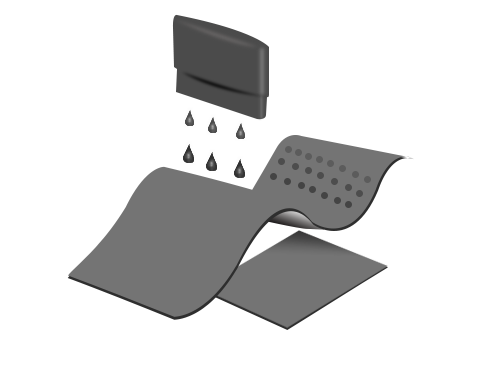
Illustrations of liquid penetration on multilayer ceramic surfaces show how nanoscale porosity and surface energy influence absorption behavior and biological interaction. This level of control is difficult or impossible to achieve using conventional bulk materials.
In biomedical research, high-purity nanomaterials are preferred due to their stability, low cytotoxicity, and reproducible performance.
6. ZHILI Nanomaterials: Supporting Innovation with High-Purity Nano-Grade Materials
ZHILI provides advanced nanoscale materials optimized for biomedical use, including:
- Nano-graphene & MXene for biosensors
- Nanostructured alumina & zirconia for implant engineering
- High-purity nano-powders for drug delivery research
- Surface-functionalized particles for imaging enhancement
Our research collaborations and continuous technical development ensure stability, purity, and performance across clinical and laboratory applications.
7. Outlook: The Future of Biomedical Nanotechnology
As global healthcare moves toward personalized and regenerative medicine, nanotechnology will play an increasingly central role. With advancements in surface engineering, targeted therapies, and nanoscale diagnostics, biomedical nanotechnology is positioned to redefine how diseases are detected and treated.
ZHILI Nanomaterials will continue supporting hospitals, universities, and research institutes with safe, reliable, and customizable nanomaterials that power the next wave of medical breakthroughs.As medical technologies advance, high-purity nanomaterials will continue to play a critical role in precision medicine.