
5 Breakthrough Ways Nanotechnology in Manufacturing Is Transforming Industry
Understanding Industrial Material Innovation at the Nanoscale
Industrial innovation is entering a transformative era powered by nanotechnology in manufacturing. By engineering materials at the atomic and molecular scale, manufacturers are achieving performance levels previously unattainable with conventional methods. Nanoscale design enables improvements in mechanical strength, thermal stability, electrical conductivity, and surface functionality, while maintaining compatibility with existing production systems.
The adoption of nanotechnology in manufacturing is not limited to high-tech labs; it is rapidly expanding into industrial production lines, enabling new classes of materials and processes that were once considered impossible. For an introductory overview of nanostructured materials and their fundamentals, see AZoNano:
https://www.azonano.com/
This article explores five breakthrough ways nanotechnology in manufacturing is reshaping industries, from polymer reinforcement to biomedical applications, demonstrating the potential of nanoscale engineering to redefine modern industrial practices.
1.Nanoscale Structure Driving Macroscopic Change
When the size of particles or structural features is reduced to the 1–100 nm rWhen material features are reduced to the 1–100 nanometer range, they exhibit unique behaviors distinct from their bulk counterparts:

- Quantum effects influence optical, electronic, and magnetic properties
- High surface-area effects increase chemical reactivity and interfacial bonding
- Nanoscale strengthening mechanisms improve hardness, toughness, and fatigue resistance
These phenomena allow manufacturers to enhance traditional polymers, metals, and ceramics without altering the base composition. Nanotechnology in manufacturing enables this precise control, improving material performance while minimizing changes to established industrial processes.
For example, nanoscale structuring of ceramic powders can improve sintering efficiency, reduce porosity, and enhance dielectric strength—key advantages for electronic substrates and high-temperature applications.
2. Nano-Enhanced Industrial Materials
Polymers and resins benefit significantly from nanoscale reinforcement. Incorporating graphene nanosheets, carbon nanotubes, or MXene flakes can lead to:
| Property | Typical Improvement |
|---|---|
| Electrical conductivity | 10×–10,000× |
| Thermal conductivity | 2×–15× |
| Mechanical strength | 30–300% |
These materials are widely applied in electronic housings, structural adhesives, and industrial coatings. Hybrid MXene–graphene systems demonstrate ultra-low friction, enhanced wear resistance, and improved thermal management—showing the practical benefits of nanotechnology in manufacturing for high-performance polymers.
Recent case studies indicate that nano-reinforced epoxy composites maintain dimensional stability even under prolonged thermal cycling, significantly extending the service life of industrial equipment.
3. Metal and Alloy Strengthening via Nanoscale Engineering
In metallic systems, nanotechnology in manufacturing enables:
- Grain refinement for higher strength
- Nano-ceramic dispersion for corrosion resistance
- Improved fatigue and wear resistance
Applications include turbine components, aerospace fasteners, bearing steels, and high-load machinery. Using nanoscale engineering, metals achieve longer service life and reduced weight, meeting increasingly strict industrial performance standards.
For technical reference, see ACS Publications on nanostructured metals:
https://pubs.acs.org/
Additionally, nano-structured coatings on metal surfaces reduce friction and improve thermal dissipation, further enhancing reliability in industrial environments.
4.Nano-Coatings and Surface Functionalization
IWhere bulk modification is challenging, nanocoatings provide critical benefits:
- Anti-wear and anti-corrosion protection
- UV and thermal shielding
- Anti-fouling and antibacterial surfaces
- Electrically conductive or insulating films
These coatings are applied across automotive, electronics, industrial tooling, and semiconductor manufacturing. Tailoring surface chemistry at the nanoscale allows nanotechnology in manufacturing to precisely control material-environment interactions, significantly extending product longevity.
For instance, titanium dioxide nanoscale coatings on solar panels improve UV resistance and efficiency, while silver nanoparticle layers provide antimicrobial protection on high-touch surfaces.
5.Cross-Industry Applications: Biomedicine and Beyond
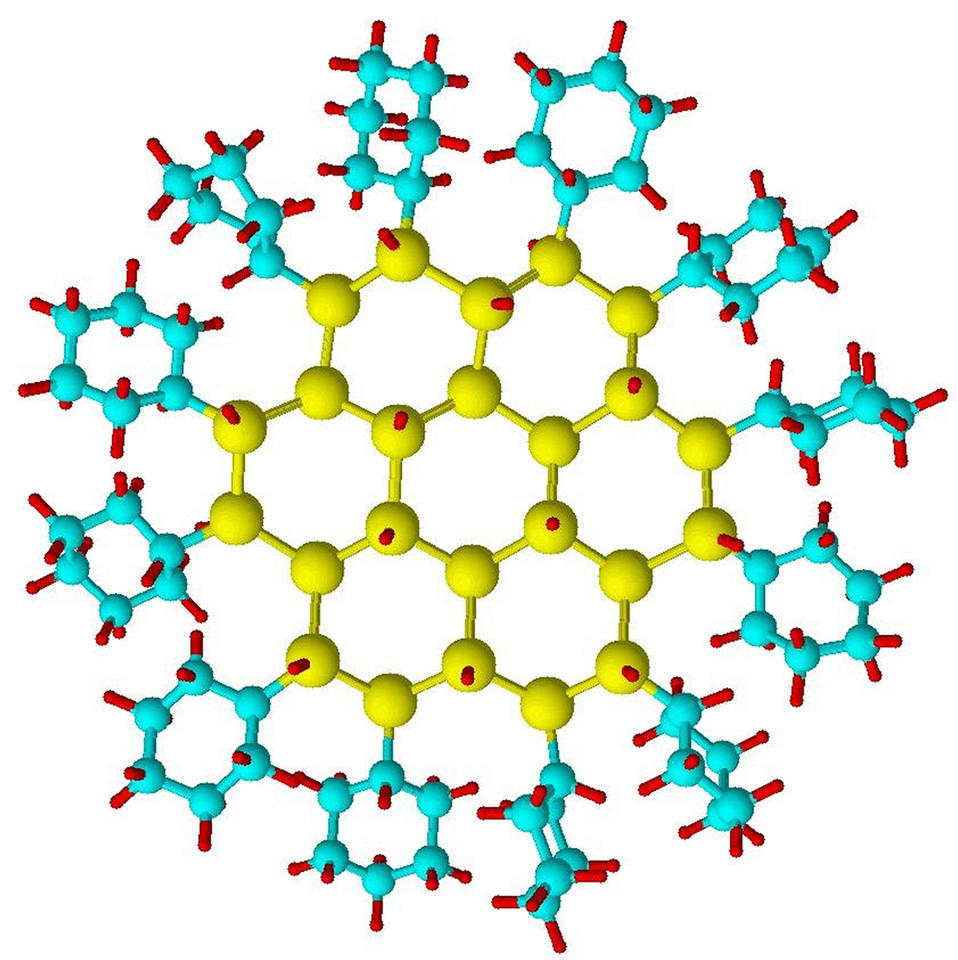
Beyond traditional industrial uses, nanotechnology in manufacturing extends to biomedical production systems. Applications include:
- Targeted drug delivery platforms
- Virus-scale biosensors
- Regenerative scaffolding materials
- Photothermal and imaging-assisted therapies
These innovations demonstrate that nanoscale engineering is not only enhancing industrial materials but also supporting highly specialized, high-tech manufacturing processes. Research published in MDPI journals highlights the ability of nanoscale surface engineering to accelerate tissue regeneration and improve implant integration:
https://www.mdpi.com/
Conclusion: Why Nanotechnology in Manufacturing Defines Modern Industry
In summary, nanotechnology in manufacturing is transforming industrial materials and production methods. By leveraging nanoscale structure, hybrid reinforcement, and advanced coatings, manufacturers achieve unprecedented levels of performance, efficiency, and durability.
Industries adopting nanotechnology in manufacturing gain competitive advantages, including longer product lifespans, reduced material usage, and enhanced functionality. From polymers and metals to biomedical scaffolds, nanoscale innovation is becoming the foundation of modern industrial advancement.
Looking forward, the continued evolution of nanotechnology in manufacturing promises greater integration with AI-driven production, predictive maintenance, and sustainable manufacturing. Companies that embrace these breakthroughs will lead the next wave of global industrial innovation, combining cutting-edge materials with advanced engineering for unprecedented performance and reliability.