
MXene/Graphene Oxide Hybrid Coatings – Ultra-Low Friction Bearing Steel Applications
Explore the lubrication and wear mechanisms of Ti₃C₂Tₓ MXene and Graphene Oxide hybrid nanocoatings on bearing steel. Friction coefficient reaches 0.065, with proven industrial scalability.
Introduction to MXene Graphene Oxide Coatings
In modern tribology, MXene Graphene Oxide hybrid coatings have emerged as a transformative solution for reducing friction and wear on bearing steel. By integrating Ti₃C₂Tₓ MXene and Graphene Oxide (GO), these coatings achieve ultra-low friction coefficients and outstanding durability, bridging the gap between lab innovation and scalable industrial applications.
This article focuses on the application of Ti₃C₂Tₓ MXene and Graphene Oxide (GO) hybrid coatings on bearing steel, analyzing their ultra-low friction coefficient, superior wear performance, formation mechanisms, and scalable industrial production pathways.
It aims to provide comprehensive insights for materials scientists, equipment manufacturers, and tribology engineers.
1. What Are MXene and Graphene Oxide?
1.1Introduction to MXene Graphene Oxide Coatings
MXenes are a family of 2D transition metal carbides, nitrides, or carbonitrides with the general formula Mₙ₊₁XₙTₓ (where M = transition metal, X = C and/or N, and Tₓ = surface functional groups such as O, OH, or F).维基百科+2About Tribology+2。
They exhibit high electrical conductivity, mechanical strength, and tunable surface chemistry, making them ideal for applications in energy storage, sensors, catalysis, and solid lubrication.About Tribology+1
In tribology, MXenes act as solid lubricants, reducing friction and wear at sliding interfaces.(Reference:Nature+1)
1.2 Introduction to Graphene Oxide (GO)
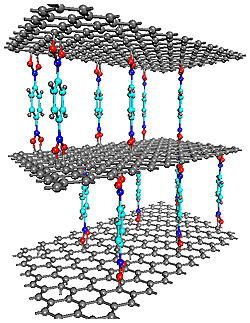
Graphene Oxide is a 2D carbon-based material consisting of oxygen-functionalized graphene sheets.
It possesses a large specific surface area, adjustable oxygen content, and superior interlayer shear properties, enabling it to form smooth lubricating films that reduce contact shear stress and enhance wear performance.PMC+1
1.3 Why Combine MXene and GO?
Each material has individual strengths but also limitations under real-world conditions (high pressure, high speed, humidity, etc.).
MXene may lose performance under humid environments, while GO’s load-bearing capability is limited.
When combined, GO provides strong adhesion while MXene provides structural strength and low shear resistance — forming a stable lubricating tribofilm.
Studies show that GO/MXene hybrids can achieve friction coefficients as low as 0.021 in aqueous lubrication environments.SpringerLink
2. Performance of MXene/GO Hybrid Coatings on Bearing Steel
2.1 Coating Preparation and Testing Conditions
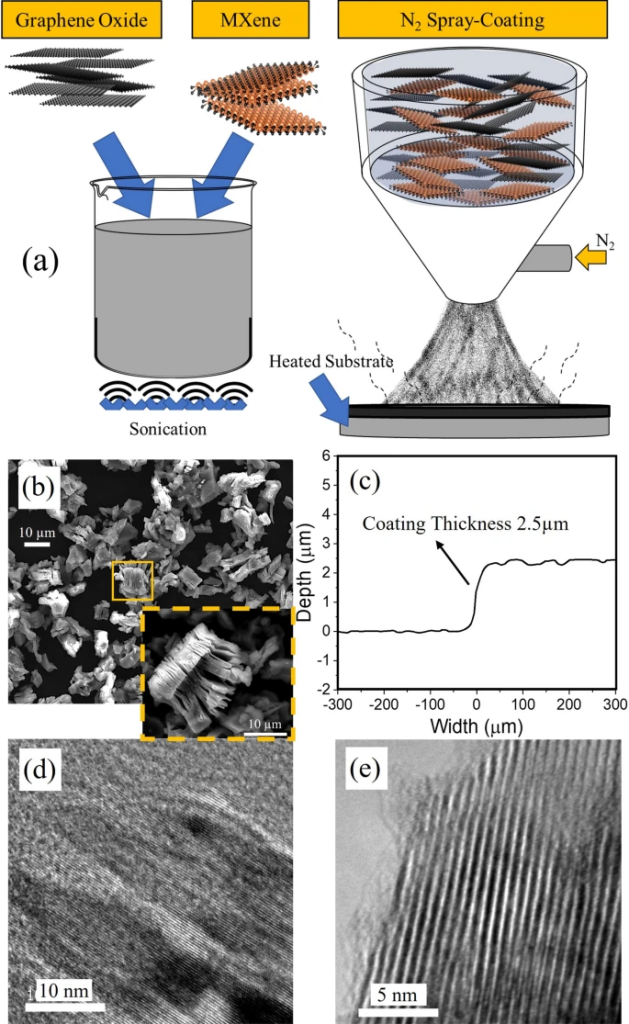
Recent research demonstrates that MXene graphene oxide coatings can be fabricated by spray-coating a mixed solution onto preheated bearing steel, followed by drying and curingNature
Tribological tests were performed using a ball-on-disk tribometer under 1 GPa contact pressure and 100 mm/s sliding speed, showing a friction coefficient reduced to 0.065.OSTI+1

2.2Friction and Wear Data
- Under the 1 N test condition, the friction coefficient is about 0.168; under the 10 N condition, it is about 0.103; and under the 20 N condition, it is about 0.065.
- Compared to untreated steel parts, the coefficient of friction is reduced by more than 90%.Nature
- Wear rates were also significantly reduced: at least 90% or more than with MXene or GO coatings alone.
2.3 Structural and Mechanistic Analysis
Raman spectroscopy, SEM, TEM, and nanoindentation tests reveal the formation of a dense tribofilm after sliding — consisting of saturated-bond MXene layers and partially reduced GO regions forming sp² carbon domains.
This tribofilm exhibits low shear strength and high load-bearing capacity, ensuring long-term stability.
Mechanism summary:
- GO provides adhesion and flexibility
- MXene ensures structural reinforcement
- Their layered sliding structure delivers low friction and low wear
3. Industrial Scalability and Applications
3.1 Scalable Spray-Coating Process
The spray-coating method is simple, cost-effective, and applicable to complex geometries — demonstrating excellent industrial scalability.
This enables transferring the technology from lab-scale research to mass-manufacturing mechanical components such as bearings, gears, and transmission parts.
3.2 Typical Applications
- Rolling and Sliding Bearings – under high load/speed
- Metal-to-Metal Interfaces – engines, gearboxes, rail systems
- Aerospace and Wind Turbines – long-life lubrication with minimal maintenance
- Precision Robotics – ultra-low friction, minimal wear in micro mechanisms
3.3 Advantages Summary
- Rolling and Sliding Bearings – under high load/speed
- Metal-to-Metal Interfaces – engines, gearboxes, rail systems
- Scalable process → compatible with large/complex parts
- Tunable material design → adjustable ratio and surface terminations
4. Implementation and Engineering Guidelines
4.1 Substrate Preparation
- Use clean, preheated bearing or engineering steel substrates
- Remove oxides, oil, and debris to ensure adhesion
- Prepare MXene/GO suspension in ethanol for stable dispersion.About Tribology
4.2 Coating Parameters
- Coating thickness: ~2.5 µm ± 0.12 µm
- Spray on preheated substrates (100–200°C)
- Ensure complete drying/curing for strong adhesion
4.3 Testing and Verification
- Perform ball-on-disk or pin-on-disk tests at multiple loads
- Use SEM, TEM, Raman to confirm tribofilm formation
- Conduct long-term tests for humidity, temperature, and vibration stability
4.4 Integration with Platform / Service Pages
- Learn more about our Nanocoating Services → [our Service URL]
- Explore applications of Graphene-based coatings in bearings → [our Previous Article URL]
- Macknojia et al. (2023), Scientific Reports: [https://doi.org/10.1038/s41598-023-37844-0]
5. Market Trends and Future Outlook
5.1 Market Overview
As machinery evolves toward high load, high speed, and lightweight, tribological coatings based on 2D nanomaterials are transitioning from research to application.
MXene graphene oxide coatings demonstrate strong potential in dry, high-pressure, high-speed conditions.
5.2 Future Research Directions
- Optimizing composition – MXene/GO ratio, terminations, layer thickness
- Expanding substrates – stainless steel, aluminum, titanium alloys
- Enhancing stability – performance under humidity, heat, corrosion
- Hybrid lubrication – combining solid coatings with liquid lubricants
- Intelligent monitoring – real-time wear tracking and predictive maintenance
6. Conclusion
This study comprehensively reviews the lubrication and wear behavior of MXene graphene oxide coatings hybrid nanocoatings on bearing steel.
From material fundamentals to coating fabrication, performance testing, mechanism analysis, and industrial scalability, it showcases the technology’s transformative potential in mechanical engineering.
For manufacturers seeking higher efficiency, longer lifespan, and lower maintenance costs, MXene/GO coatings present a feasible and scalable path forward.
FAQ
Q1. Why is MXene+GO better than either material alone?
Because GO provides adhesion and flexibility, while MXene contributes strength and low shear resistance — resulting in a synergistic, stable lubricating film.
Q2. Can this coating be used in oil-lubricated systems?
Yes. While most studies focus on dry sliding, it can integrate with oil lubrication for hybrid systems combining solid lubrication and liquid cooling.
Q3. What are key industrial considerations
Substrate cleaning, coating thickness, adhesion quality, environmental stability, long-term wear resistance, and cost scalability.
Q4. Does your platform offer relevant services?
“We provide custom nanocoating consultation and coating development services, including formulation design, spray process optimization, performance validation, and pilot production.
Frictional losses account for nearly 23% of global energy consumption, making tribology an essential area in sustainable engineering. Conventional lubricants fail under high-load or high-temperature conditions, where solid lubricants such as graphene, MoS₂, and Ti₃C₂Tₓ MXenes show superior stability. However, a major challenge remains—achieving both low friction and high durability on complex metal substrates like bearing steel.