
MSC Nanovesicle-Targeted Immunomodulation for Maxillofacial Bone Regeneration
Background
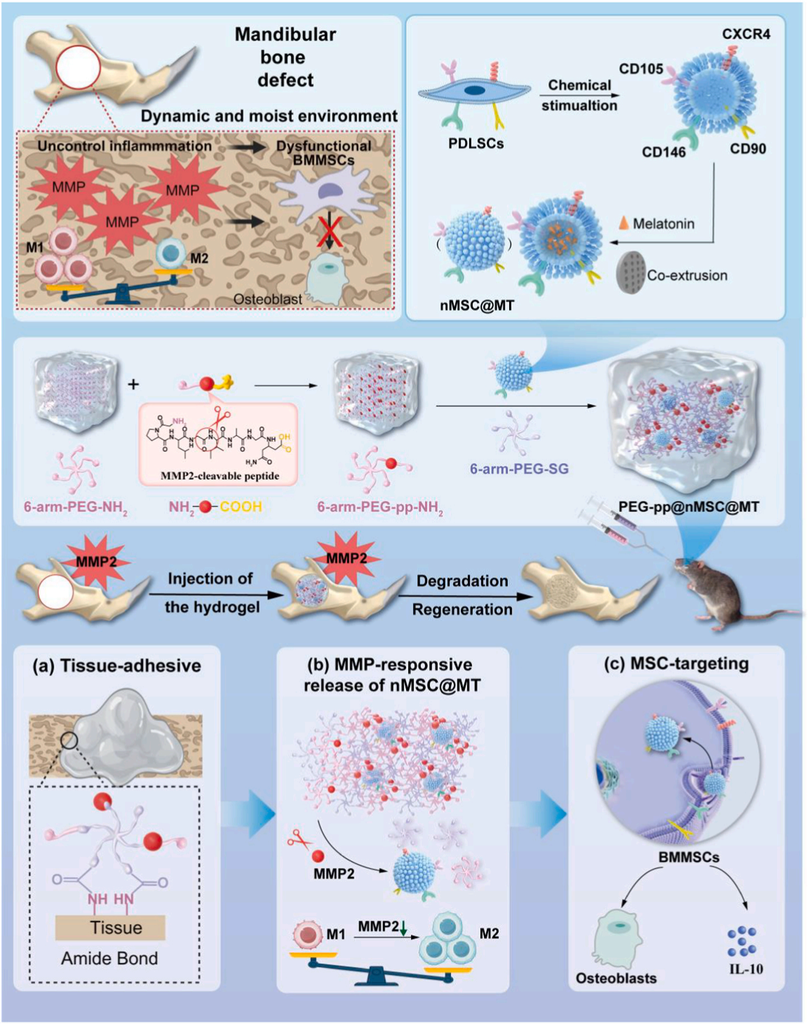
Maxillofacial bone defects are often subject to masticatory forces, infection, and an inflammatory microenvironment. Most existing filler materials struggle to simultaneously provide wet-tissue adhesion, matched degradation, and local immune regulation. More challenging, bioactive molecules lack cell targeting, making it difficult to reach BMMSCs precisely and limiting regenerative efficiency. Developing soft materials that conform to defects, respond to pathological signals, and deliver functional molecules to target cells has become a key direction for maxillofacial bone regeneration.
Innovation
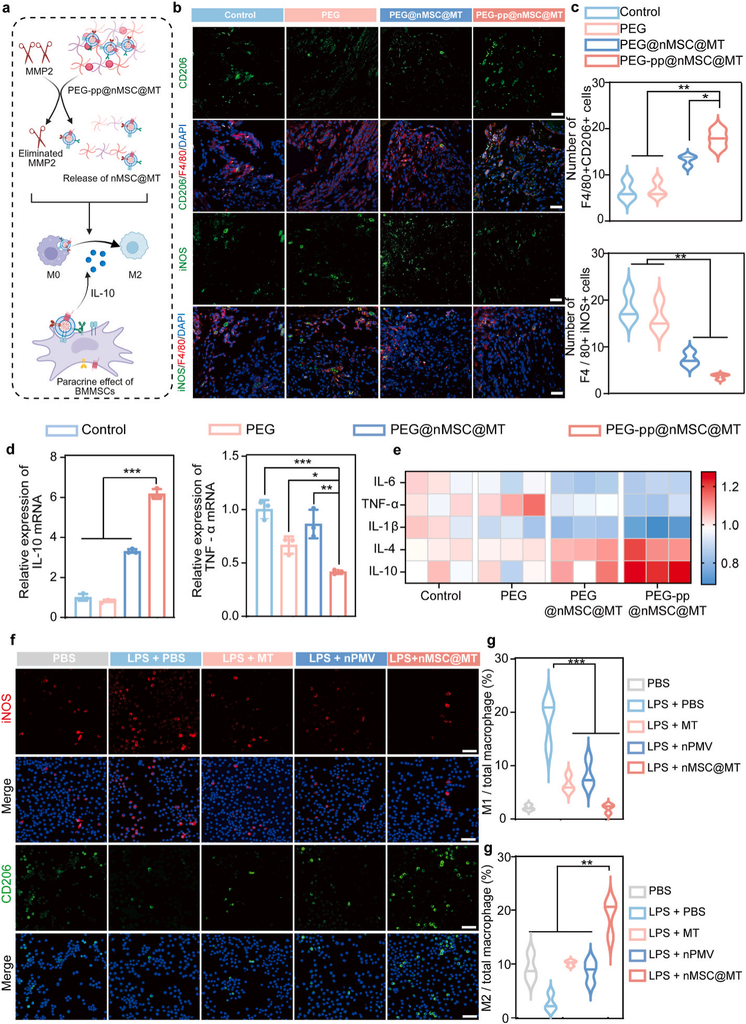
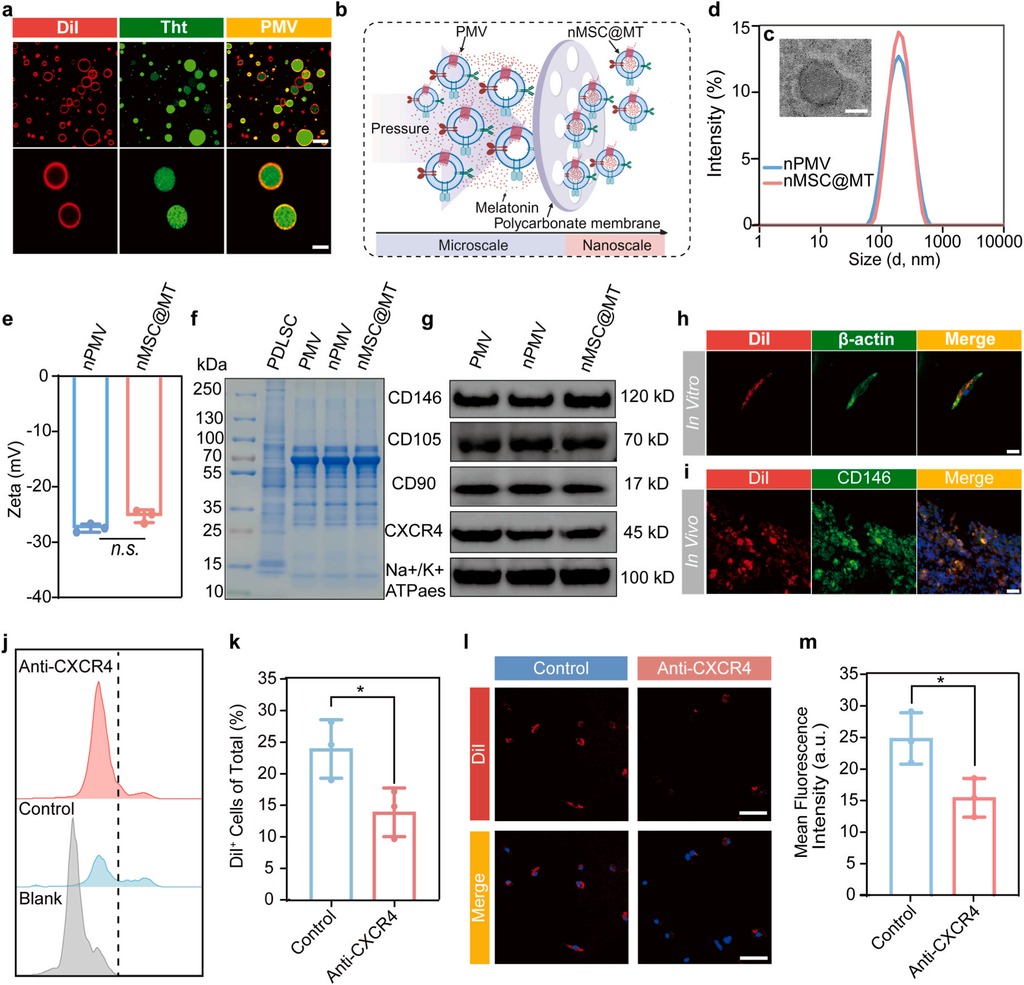
MSC-derived membrane nanovesicles are embedded in an injectable adhesive hydrogel. The nanovesicles retain MSC membrane proteins and CXCR4, enabling homing-like targeting to BMMSCs and precise delivery of melatonin. The hydrogel can be triggered by MMP2 for release while consuming excess MMP2. The nanovesicles shift macrophages toward an M2 phenotype, creating a favorable microenvironment for osteogenesis. Targeted delivery and immunomodulation are integrated into one material system.
Materials Research
The material rapidly gels via amidation between 6-arm PEG-SG and PEG-NH2, forming a gel in about 20 seconds. Its wet-surface adhesion is stronger than fibrin glue and can resist masticatory forces. MMP2-cleavable peptides are incorporated into the network, enabling on-demand nanovesicle release and reducing MMP2 activity. The hydrogel is porous, degradable, and biocompatible. In animal models, it promotes osteogenesis- and angiogenesis-related expression, outperforms Bio-Oss, and degrades more promptly.
Note: This post only shares frontier research updates and does not constitute any related advice.
#TissueEngineering #Hydrogel #Nanovesicles #TargetedDelivery #MaxillofacialBoneRegeneration #Immunomodulation #Biomaterials #MSCMimicking
DOI: 10.1016/j.bioactmat.2026.02.032