
Intelligent microneedle patch with cobalt-iron Prussian blue nanozymes for accelerating diabetic wound healing via heme biosynthesis-driven immunomodulation
Background
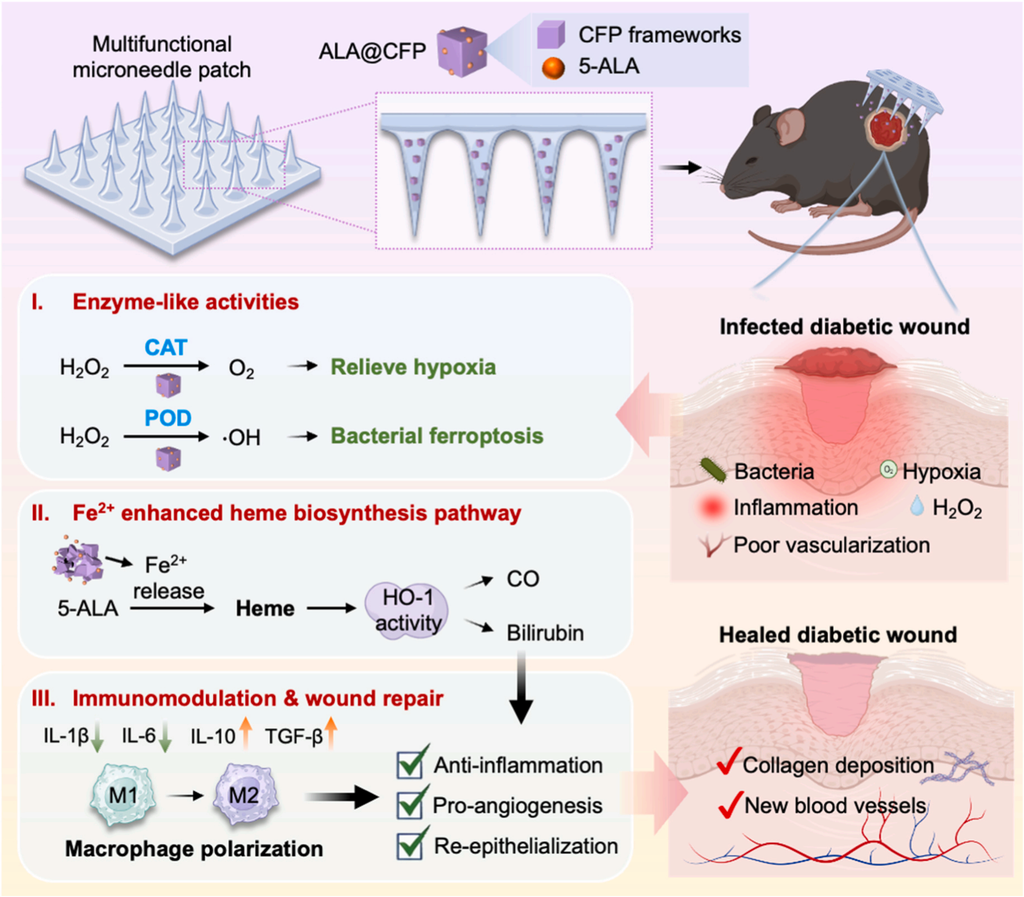
Diabetic wounds often stall at bacterial infection, excess H₂O₂, chronic inflammation, hypoxia, and poor vascularization, slowing repair. Current debridement and antibiotics struggle with this complex microenvironment. This work targets the infected and inflammatory niche, using a material platform for multi-stage regulation. It coordinates antibacterial action, oxygen supply, immune remodeling, and angiogenesis in one system, aiming at the microenvironment rather than single sterilization.
Research Innovation
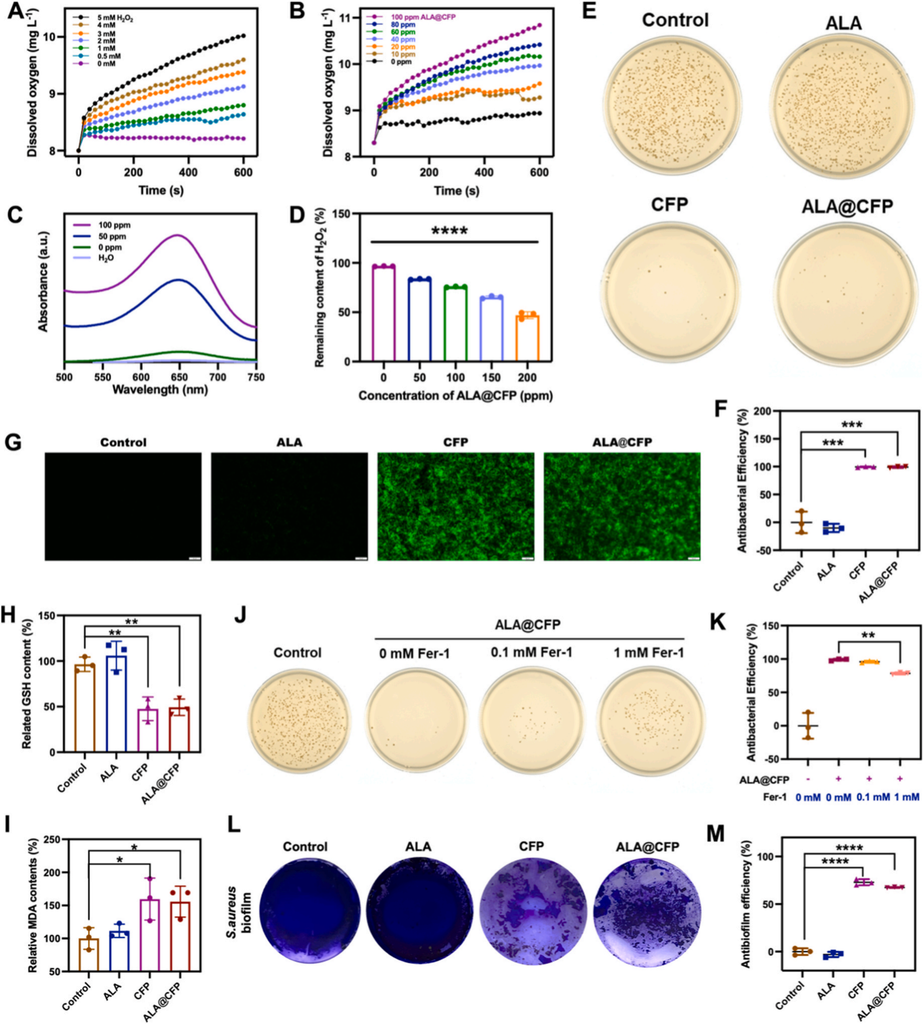
It combines cobalt-iron Prussian blue nanozymes with the 5-ALA prodrug in a microneedle patch. POD-like activity responds to H₂O₂ to produce ·OH, inducing bacterial ferroptosis and dismantling biofilms. CAT-like activity decomposes H₂O₂ into O₂, easing hypoxia. Fe²⁺ promotes 5-ALA conversion to heme, amplifies HO-1, generates CO and bilirubin, drives M1→M2, upregulates anti-inflammatory factors, and supports migration and angiogenesis. Targets infection, hypoxia, and inflammation.
Materials Research
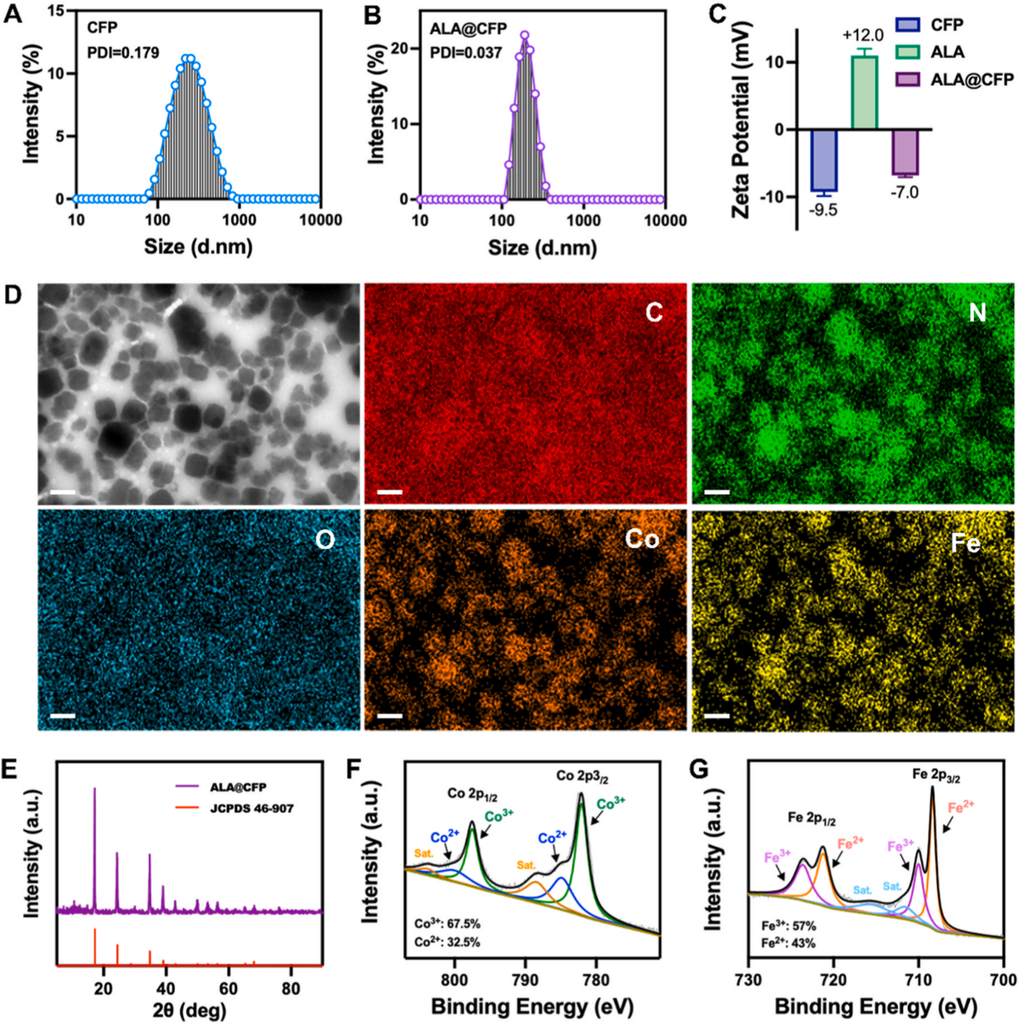
The core is ALA@CFP, made by a one-pot method, about 190 nm, PDI 0.037, with coexisting Fe²⁺/Fe³⁺ and Co²⁺/Co³⁺. 5-ALA loading reaches EE 90.5% and DLE 11.1%. It is embedded in GelMA/CMCS hydrogel microneedles, UV crosslinked, 650 μm long, with 0.21 N force per needle, enough to penetrate skin. Swelling and enzyme degradation give dual release. CMCS adds antibacterial function; microneedles enable deep delivery. Mouse models show improved antibacterial action, collagen deposition, epithelial lining, and angiogenesis.
Note: This article is only a frontier update share and does not constitute any related advice.
#SmartMicroneedle #Nanozyme #Biomaterials #FrontierResearch #AntibacterialMaterials #ImmuneRegulation #HemeSynthesis #WoundRepair #WoundMicroenvironment #TargetedDelivery
DOI: 10.1016/j.bioactmat.2026.04.005
E-mail:mxenes@163.com