
Bioactive orientin-loaded Janus adhesive hydrogel promotes macrophage polarization and gastric injury repair
Background
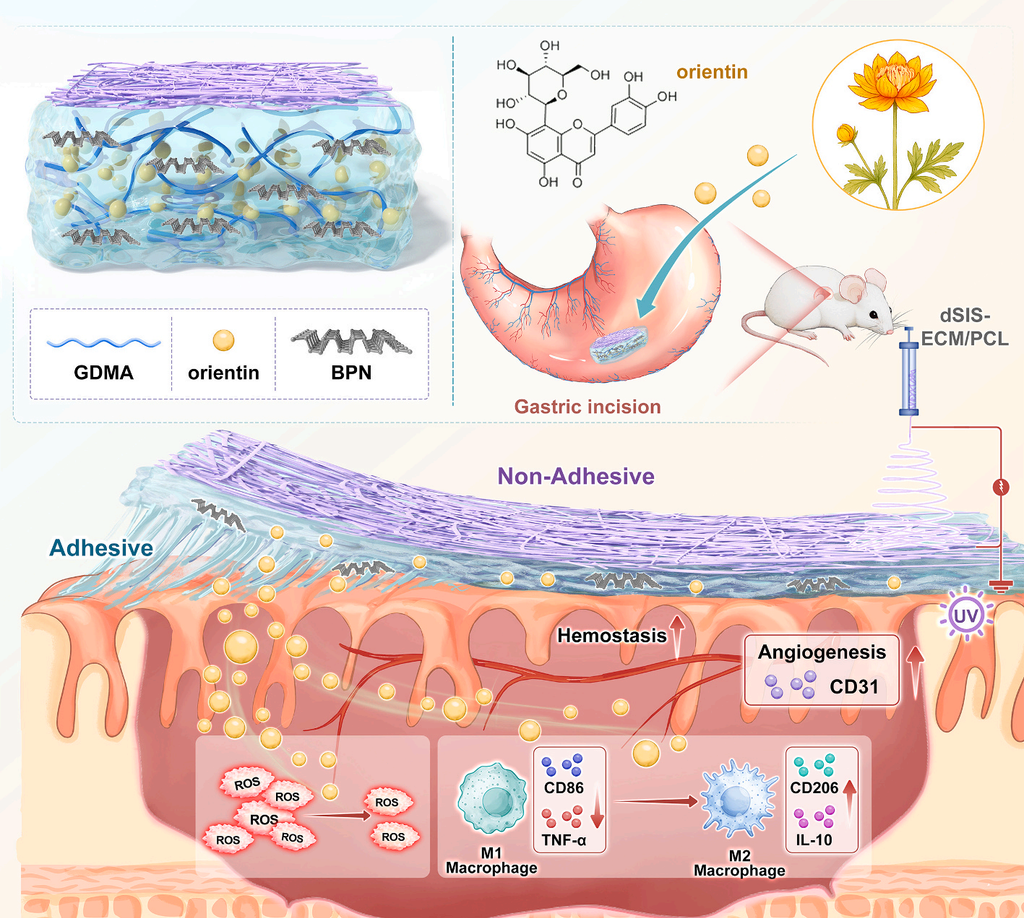
Gastric injury repair is challenging because the stomach is constantly exposed to acid, mechanical movement, and strong inflammation. Conventional suturing can close defects, but it may cause leakage, tissue adhesion, and local irritation. The target here is not just sealing. It is wet adhesion under harsh conditions, early control of the inflammatory storm, and a shift in macrophages from the pro-inflammatory M1 state to the reparative M2 state. This immune-directed angle matters for creating a microenvironment that supports stable tissue rebuilding.
Innovation
This work combines an asymmetric Janus design with a natural bioactive molecule. One side resists unwanted adhesion; the other uses a dopamine-modified network for one-sided wet adhesion. Black phosphorus nanosheets add mechanical support and help manage interfacial water, while orientin targets oxidative stress and inflammation. The material aims to guide macrophages toward the M2 phenotype and support angiogenesis and mucosal continuity. Instead of acting only as a physical plug, it works as an interface that actively tunes the local immune microenvironment.
Material Study
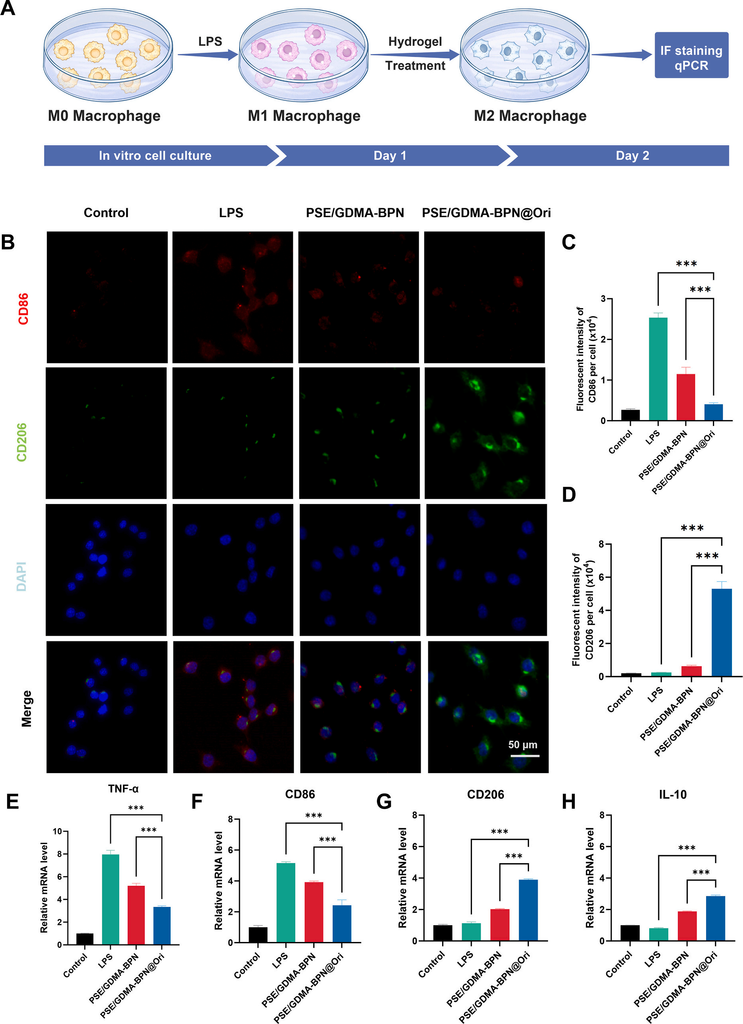
The material has a PCL/dSIS-ECM electrospun layer and a GDMA-BPN@Ori hydrogel layer. The upper layer mimics extracellular matrix, with a smoother, more hydrophobic surface that limits tissue attachment. The lower porous layer contains black phosphorus nanosheets and orientin, giving wet adhesion, mechanical support, and sustained release. In vitro, it scavenges reactive oxygen species, lowers CD86 and TNF-α, and raises CD206. In a rat gastric perforation model, it improves mucosal regeneration, angiogenesis, and collagen organization while reducing inflammation and adhesion.
Note: This is only a frontier update and does not constitute any related advice.
#JanusHydrogel #GastricRepair #MacrophagePolarization #ImmuneMicroenvironment #Biomaterials #WetAdhesion #Orientin #BlackPhosphorus #ResearchFrontier
DOI: 10.1016/j.cej.2026.177854