
Engineering Strain‑Stiffening Granular Hydrogels for 3D‑Printed Tissue‑Mimicry
Research Background:
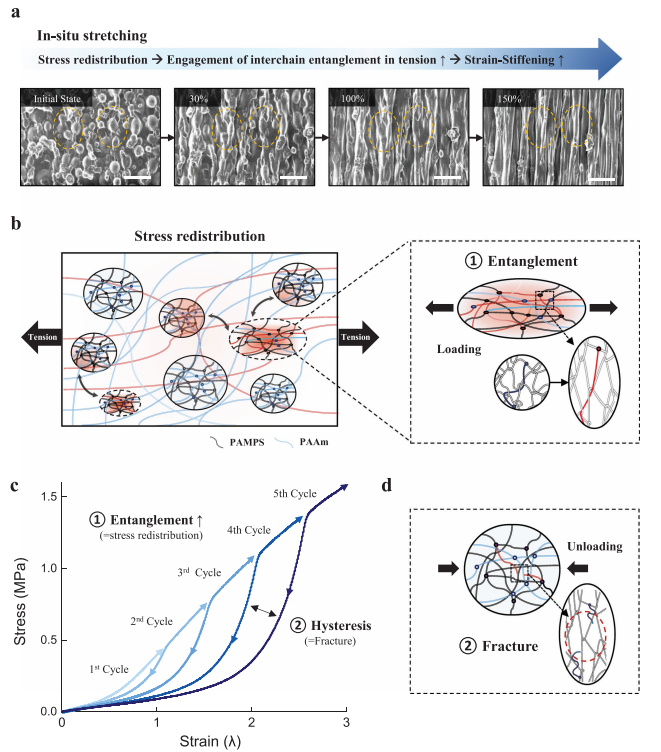
Human tissues feature unique strain‑stiffening behaviors. They stay soft under small deformation and rapidly stiffen under large load. Current synthetic hydrogels can hardly independently tune low‑strain and high‑strain moduli while maintaining high‑fidelity 3D‑printability, limiting the development of bionic organs and surgical simulation materials.
Methods & Ideas:
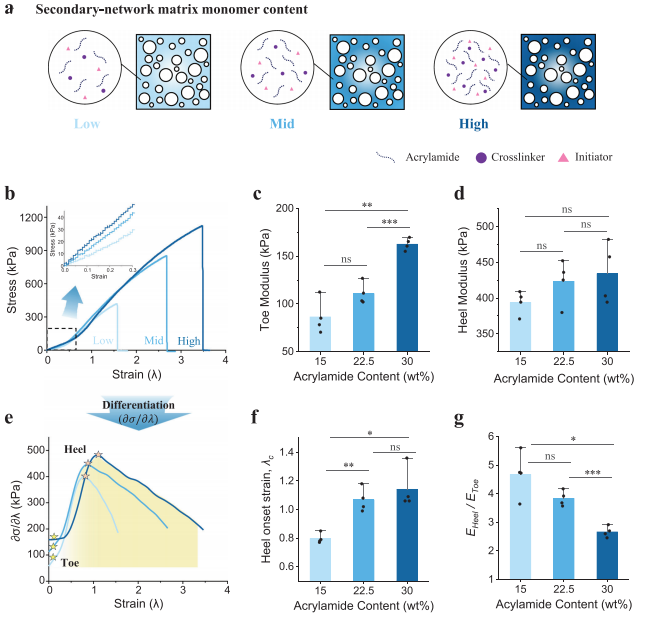
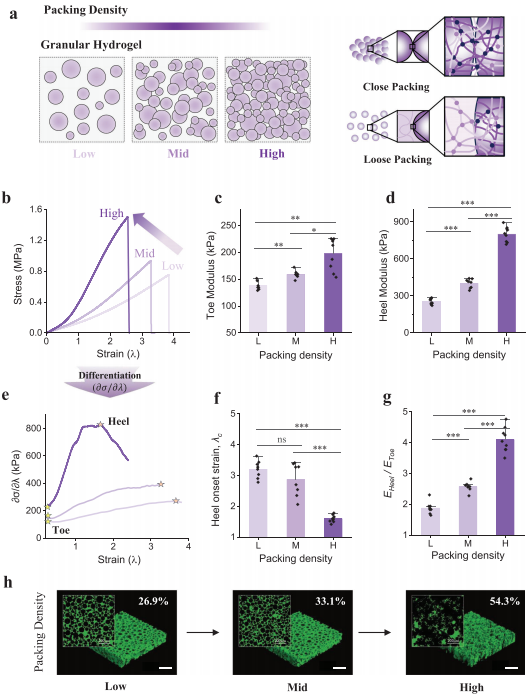
Strain‑stiffening double‑network granular hydrogel (SDGH) was developed. Secondary‑network monomer concentration modulates toe modulus, while microgel packing density controls heel modulus. In‑situ electron microscopy was used to reveal stiffening mechanism. Direct‑ink‑write 3D printing fabricated multilayer aortic valves with alternating soft‑stiff inks for mechanical and hemodynamic cyclic evaluations.
Key Results:
Decoupled modulation of two moduli was achieved. The inks show shear‑thinning and self‑healing properties with high printing fidelity. The 3D‑printed aortic valve achieves regurgitation below 1.2%, exceeding ISO standards. It maintains structural integrity after 100 loading cycles with favourable cytocompatibility, promising for bionic tissues in surgical training.
Note: This is only a cutting‑edge science share and does not constitute any relevant advice.
#Biomaterials #3DBioprinting #Hydrogel #TissueEngineering #AdvancedMaterials