
Engineering PEG-lipids for programmable in vivo mRNA delivery
Background
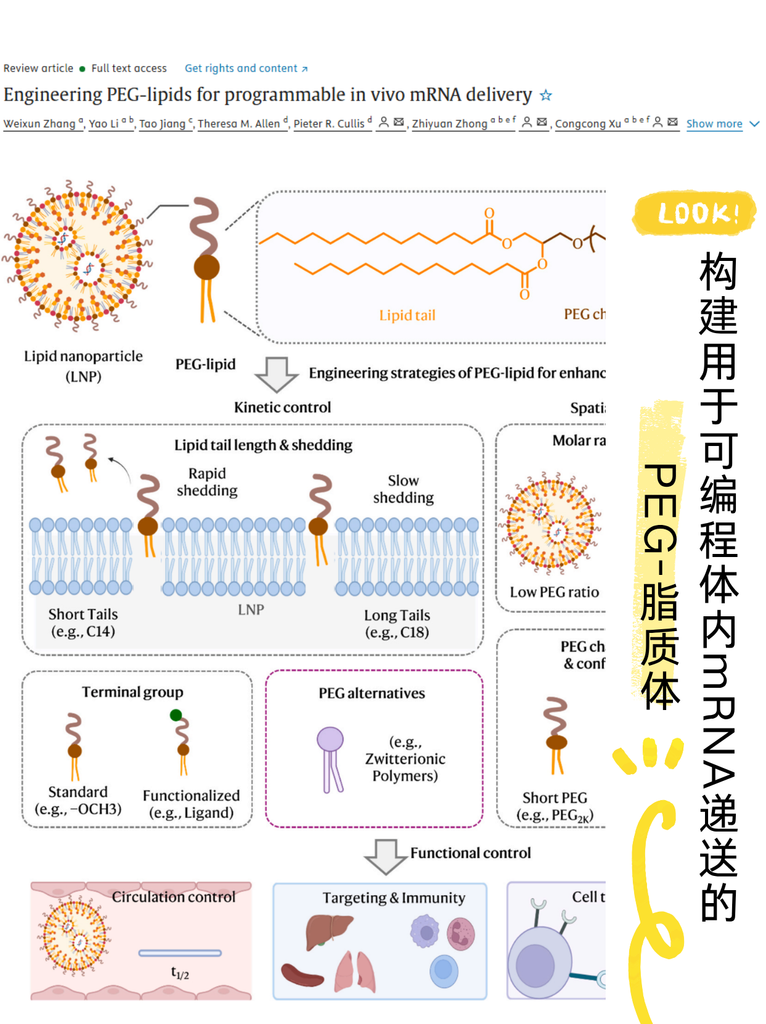
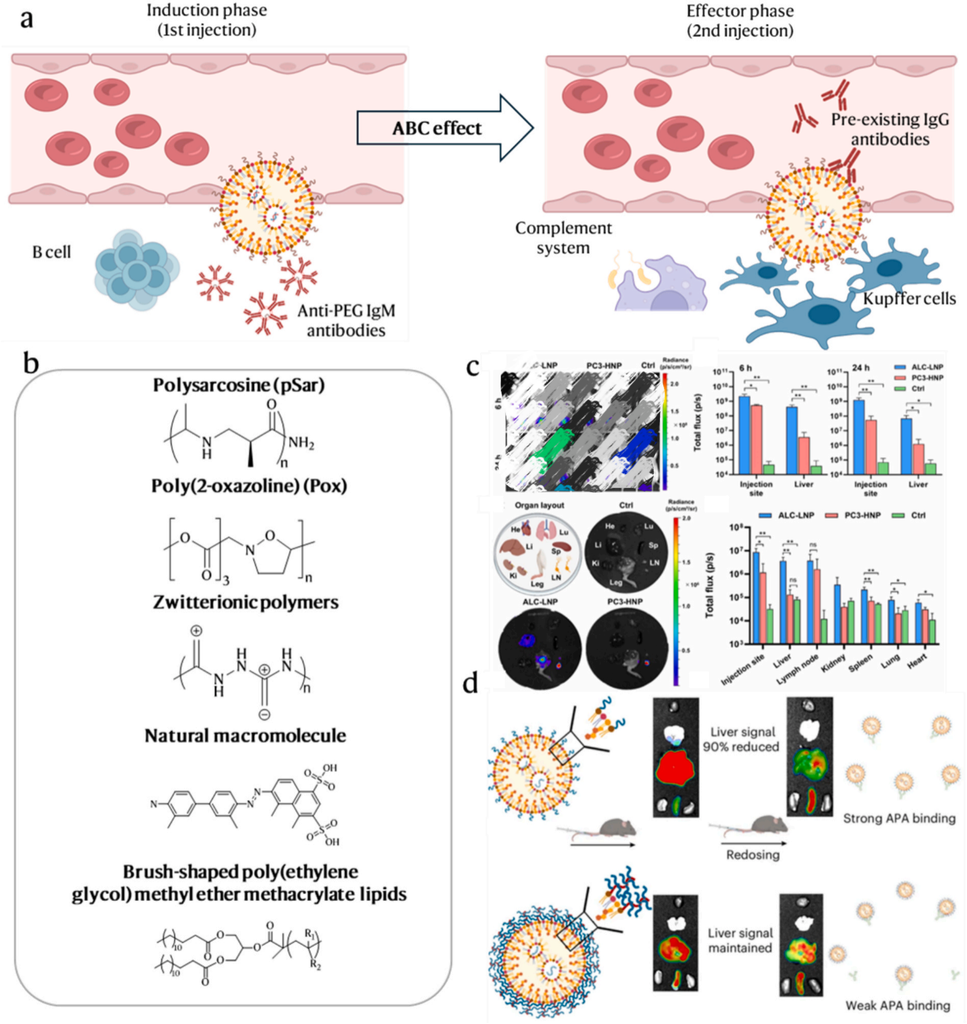
LNP is a leading carrier for mRNA delivery. PEG-lipid is only about 1.5 mol% yet shapes where particles go. It acts as a detachable stealth coat: less aggregation, longer circulation, less clearance. But PEG can trigger anti-PEG responses and accelerated blood clearance, so repeated dosing may lose effect. Natural anti-PEG antibodies add uncertainty for systemic delivery. Chain length, anchor, ratio, and terminal chemistry are now tuned toward liver, spleen, brain, lung, lymph node, T cell, and HSC targeting.
Scientific innovation
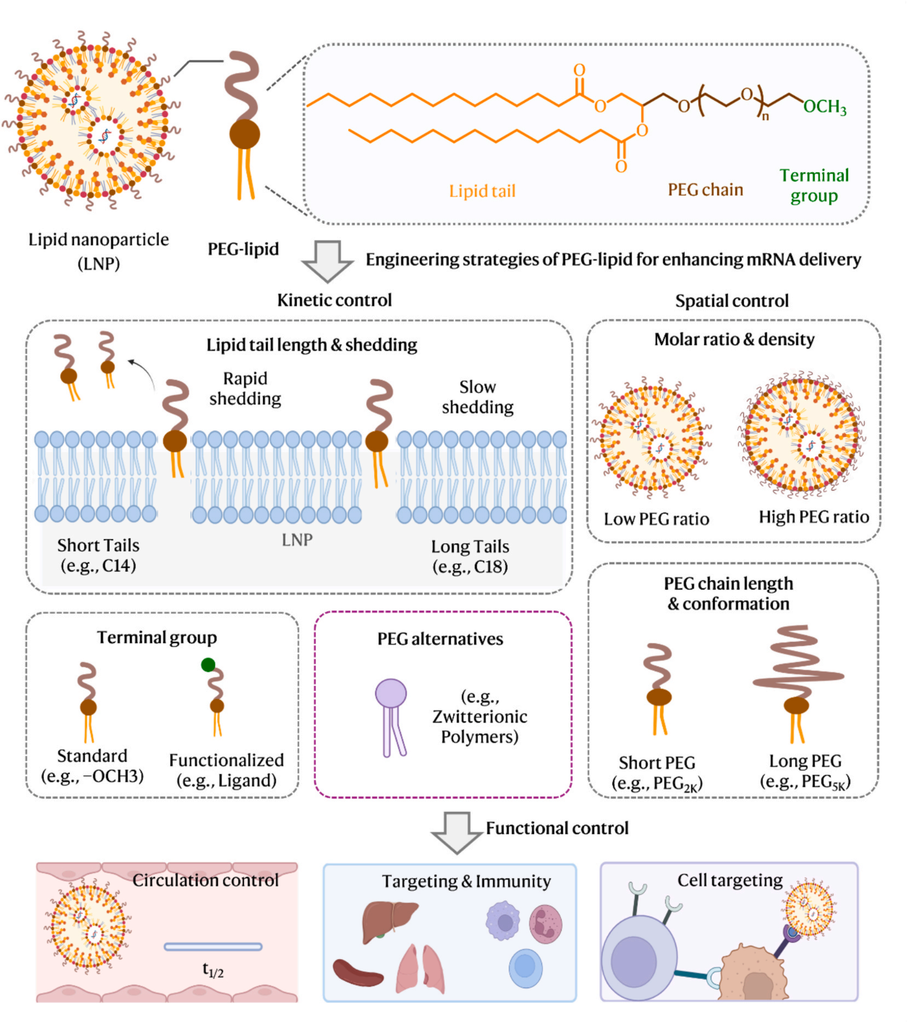
PEG-lipids are now modular. Short C14 or PEG1k sheds fast, aiding hepatocyte uptake; long C18 or PEG5k stays longer for circulation. Terminal mannose points to LSECs, GalNAc to hepatocytes, peptides to brain, lung, and retina, antibodies to T cells and HSCs. Molar ratio can shift liver-spleen preference: low ratio favors spleen, mid-high favors liver. Stimuli-responsive shedding and AI prediction push targeting from passive to programmable.
Materials research
Synthesis uses AROP, ATRP, or RAFT to control chain length. Linkers include amide, ester, carbamate, click, and maleimide-thiol chemistry. Terminals can carry carboxyl, hydroxyl, mannose, GalNAc, fluorinated groups, or reactive handles for small molecules, peptides, and antibodies. To bypass PEG limits, pSar, POx/POz, polyglycerol, zwitterionic polymers, brush polymers, cleavable PEG, and gangliosides are explored. The focus is low immune recognition, repeat dosing, and targeting to liver, spleen, brain, lung, lymph nodes, and specific cells.
Note: This is only a frontier update and does not constitute any related advice.
#mRNADelivery #LNPs #PEGLipids #TargetedDelivery #Nanomaterials #ResearchUpdate
DOI: 10.1016/j.mattod.2026.103437