
Osteogenic Nanozymes for Diabetic Bone Regeneration via Synergistic Antioxidant and Osteoinductive Functions 1
Background
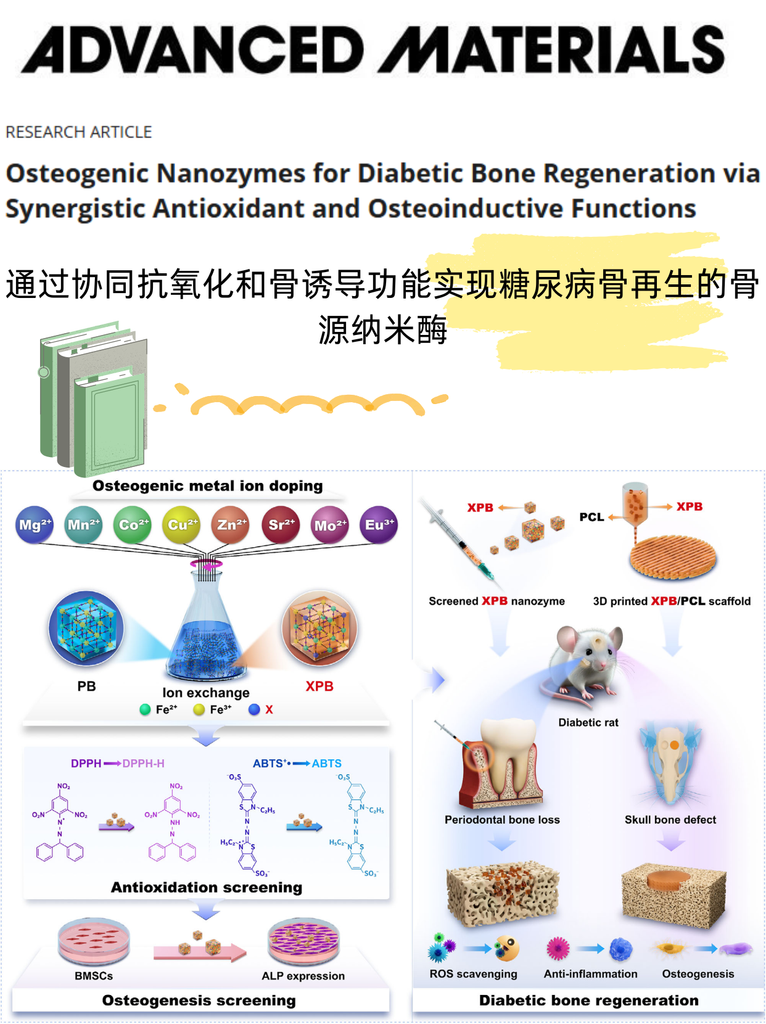
In a high-glucose setting, excess reactive oxygen species and chronic inflammation disrupt the balance between bone formation and resorption, while stem cell osteogenic capacity is impaired. Conventional bone repair materials often lose efficacy in this microenvironment. The key challenge is to clear excess ROS, suppress inflammation, and steer repair back toward osteogenesis. The target is not single antioxidant action, but the local lesion microenvironment where high glucose, oxidative stress, and inflammation intersect.
Innovation
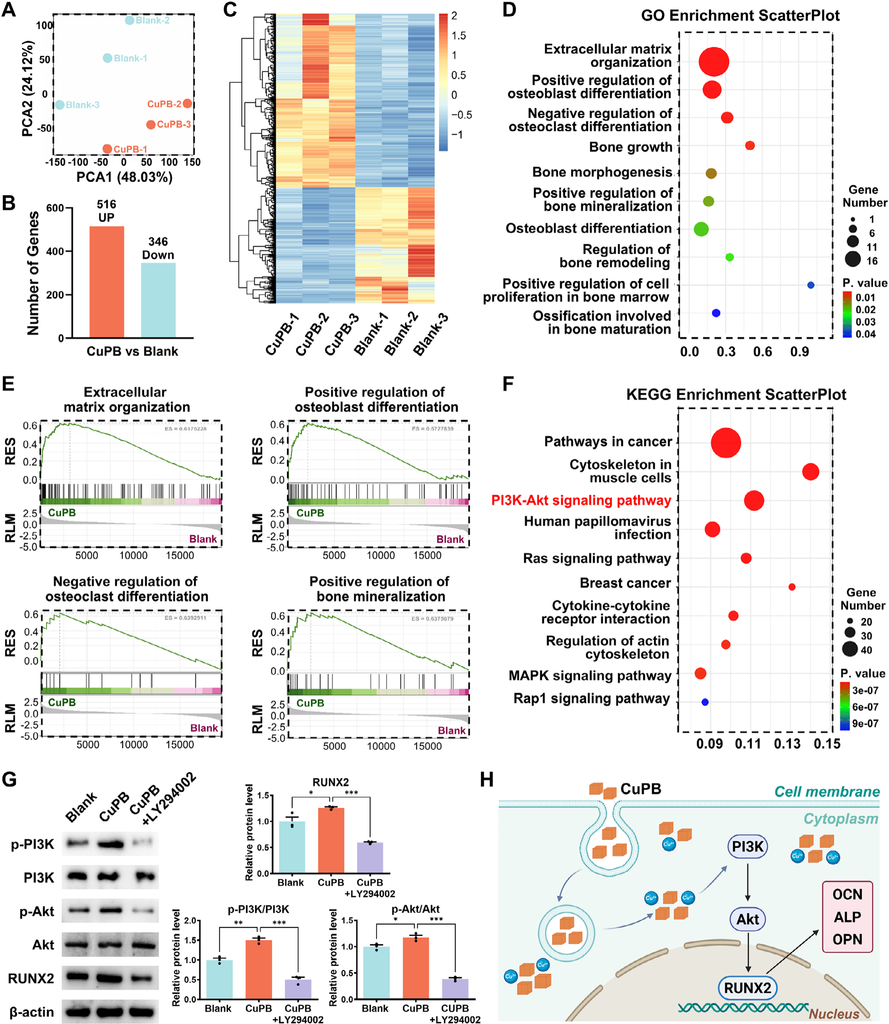
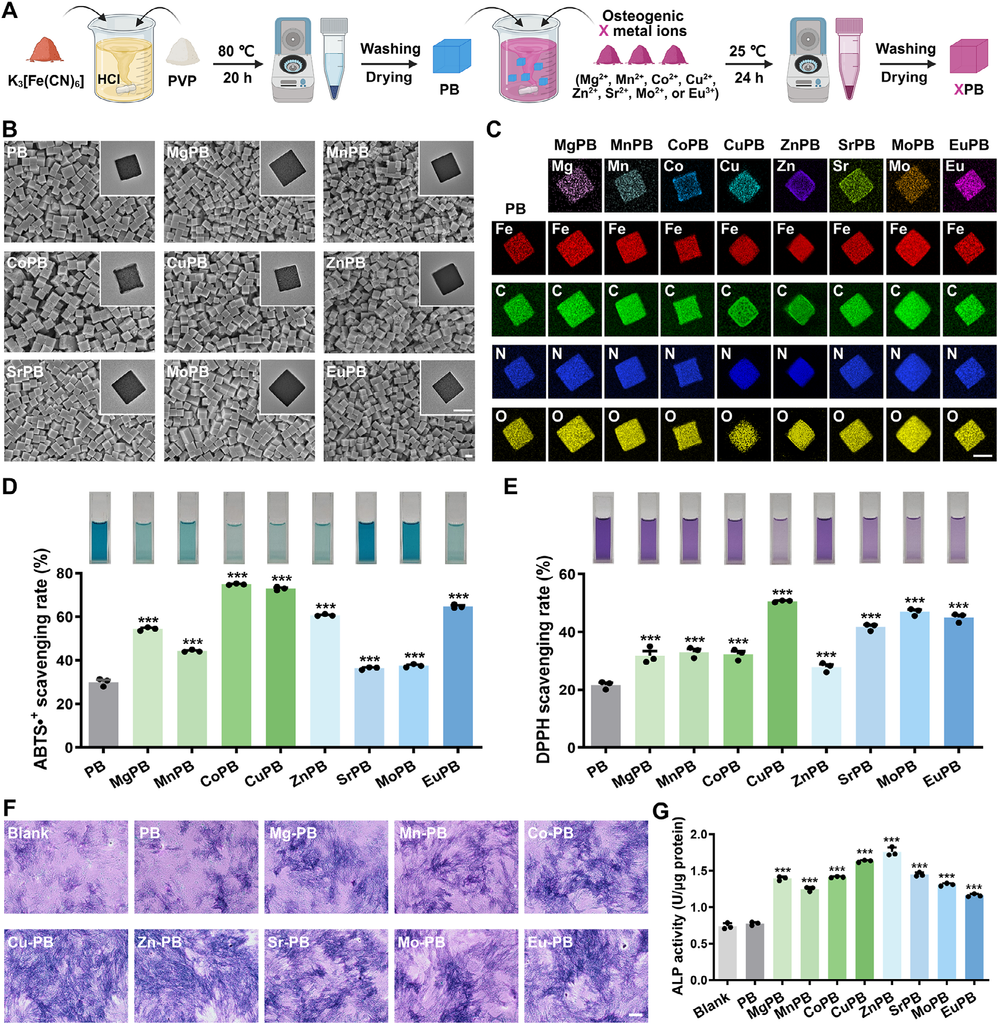
Starting from Prussian blue, multiple osteogenesis-related metal ions were incorporated, and copper-doped PB (CuPB) was screened as the best candidate. CuPB retains multi-enzyme-like antioxidant activity and uses copper ions to activate the PI3K-Akt pathway, upregulating RUNX2 and other osteogenic markers. It integrates antioxidant, anti-inflammatory, and pro-osteogenic functions into one nanoplatform, validated in high-glucose animal models of periodontal bone loss and calvarial defects, highlighting dual targeting of the lesion microenvironment and osteogenic signaling.
Material Study
The core materials are CuPB nanozyme and CuPB/PCL composite scaffolds. CuPB has a cubic structure and scavenges hydroxyl radicals, superoxide anions, and hydrogen peroxide, with higher catalytic efficiency than PB. PCL is 3D-printed into porous scaffolds. Adding a small amount of CuPB improves mechanical strength, degradation behavior, and ROS-scavenging capacity. 0.1 wt% CuPB/PCL promotes BMSC proliferation and osteogenic differentiation, and lowers inflammatory factors in macrophages, targeting the oxidative-inflammatory-osteogenic cascade at high-glucose defect sites.
Bone Regeneration
Disclaimer: This is only a frontier research update and does not constitute any related advice.
#Nanozyme #BoneRegeneration #HighGlucose #PrussianBlue #CopperDoping #3DPrinting #Biomaterials #ResearchUpdate