
Straw-Clay Bone
Background
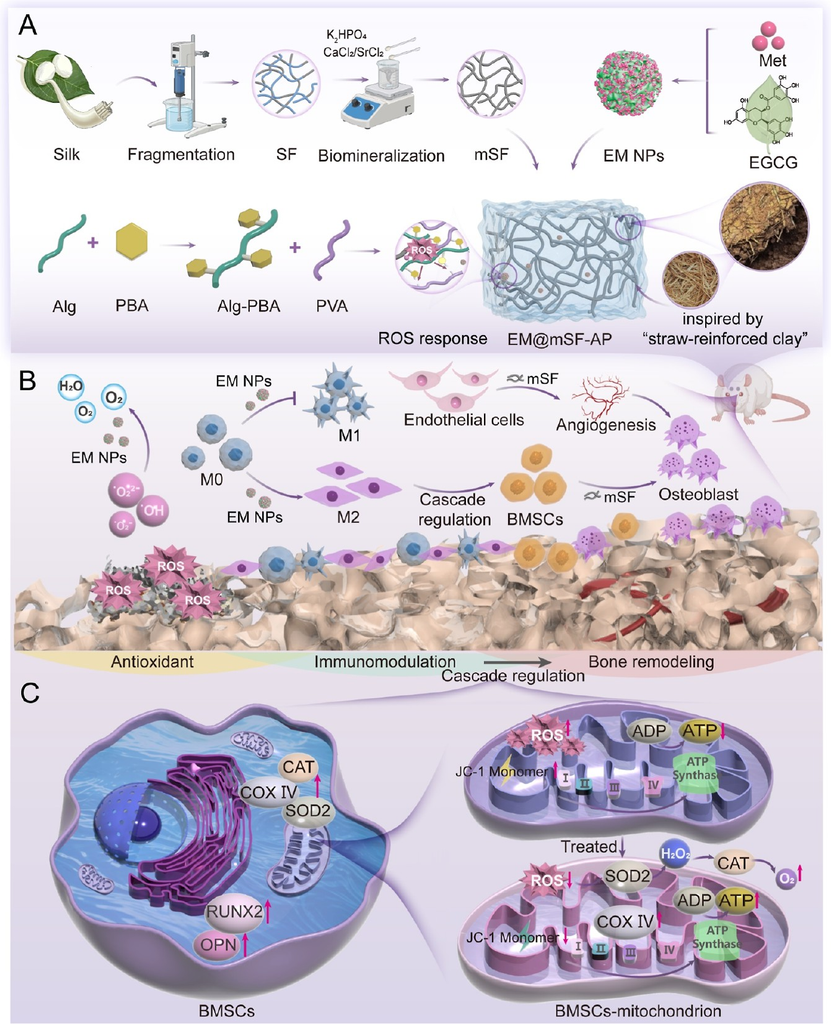
At hyperglycemia-related bone defects, oxidative stress and chronic inflammation disrupt the immune-osteogenic cascade, tipping bone marrow mesenchymal stem cells’ mitochondrial homeostasis off balance and slowing bone repair. Existing materials often struggle to simultaneously address high ROS, insufficient mechanical support, and uncontrolled release. The target should therefore be placed on the immune microenvironment and mitochondrial function, allowing the material to follow pathological signals.
Research Innovation
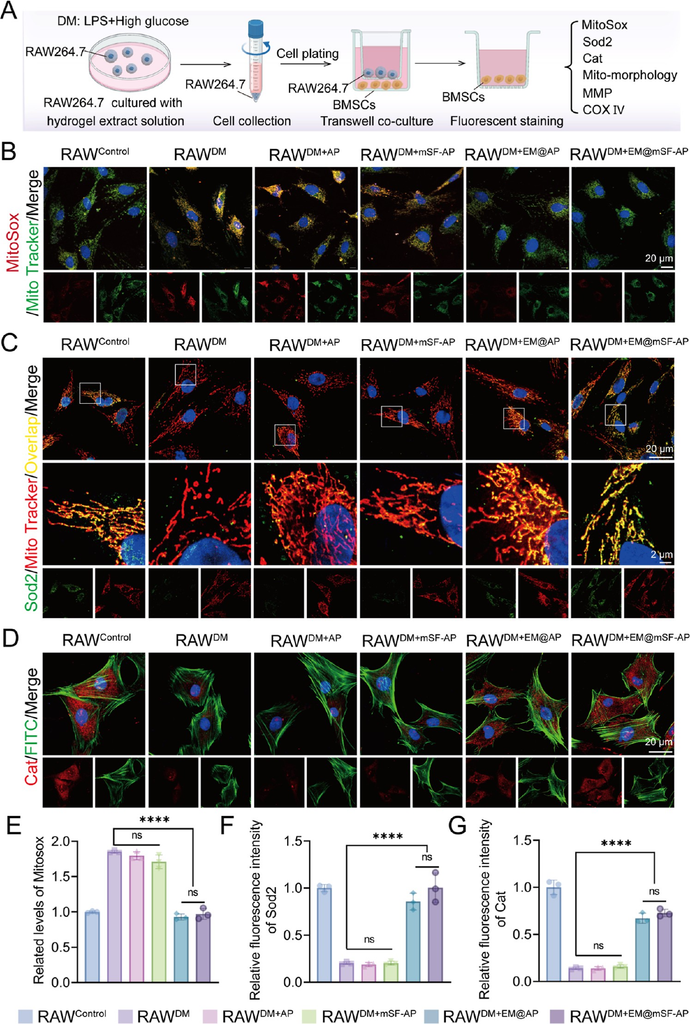
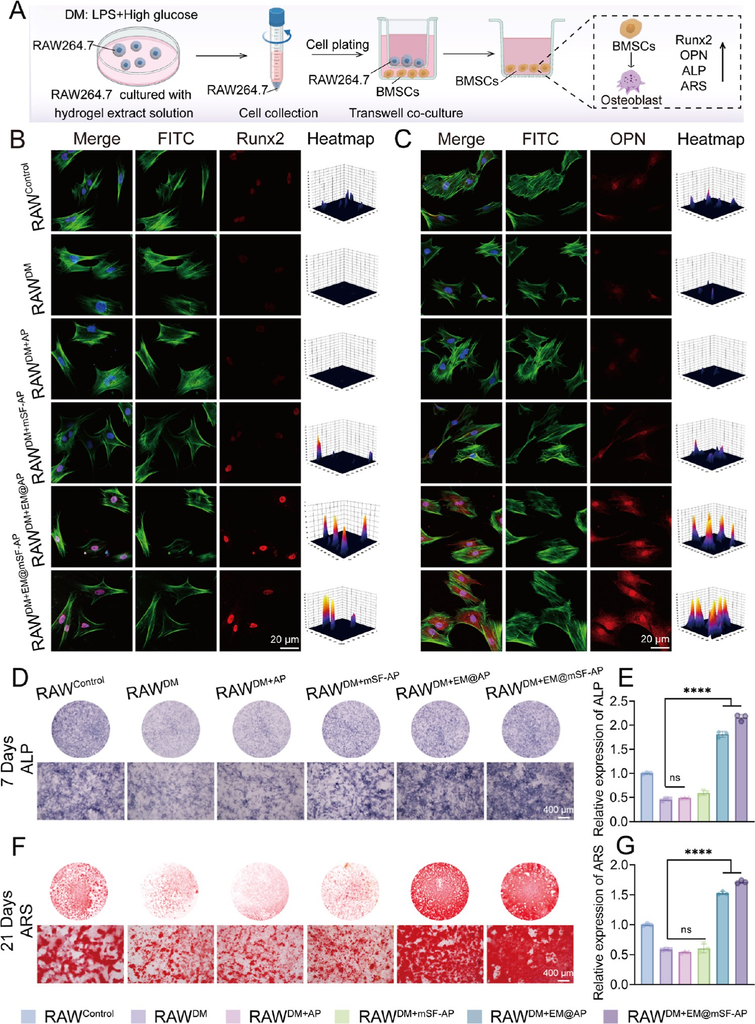
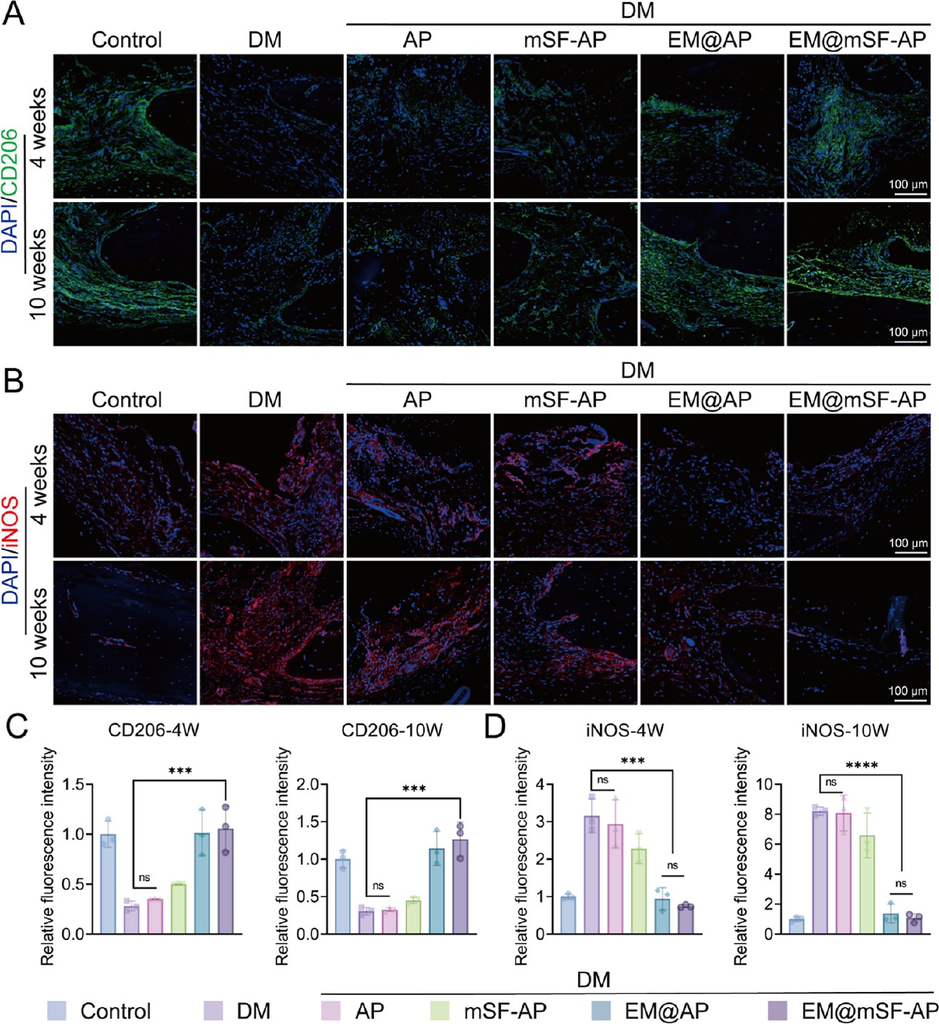
Inspired by “straw-reinforced clay,” this approach uses mineralized silk fibroin short fibers as a reinforcing phase and introduces a ROS-responsive boronic ester network. Under high ROS, the hydrogel degrades and releases EGCG-Met nanoparticles, promoting macrophage polarization toward the M2 phenotype. Through the immune-osteogenic cascade, it then influences BMSCs: activating the Sod2-Cat axis, stabilizing mitochondrial membrane potential and dynamics, upregulating COX IV, and enhancing ATP synthesis, while also supporting angiogenesis and osteogenic coupling.
Materials Research
The material uses sodium alginate-phenylboronic acid and PVA to form dynamic boronic ester crosslinks, loaded with EGCG-Met nanoparticles; mineralized silk fibroin short fibers provide mechanical reinforcement and Sr2+/Ca2+ ion signals. SEM, EDS, FTIR, etc. confirm the nanoparticles, mSF distribution, and boronic ester bond formation; in vitro release shows faster release under H2O2 and slower release in PBS. Compression tests and deformation experiments indicate that mSF improves compressive strength and shape stability and brings the release rhythm closer to the bone repair cycle.
Original title: A Straw-Reinforced-Clay-Inspired Composite Hydrogel Promotes Diabetic Bone Regeneration via Driving the Immune-Osteogenic Cascade to Remodel Mitochondrial Homeostasis
Note: This is only a frontier update sharing and does not constitute any related advice.
#Hydrogel #BoneRegeneration #ROSResponsive #ImmuneMicroenvironment #MitochondrialHomeostasis #ResearchFrontier #MaterialsScience #ACSNano #SilkFibroin #Nanoparticles