Overview
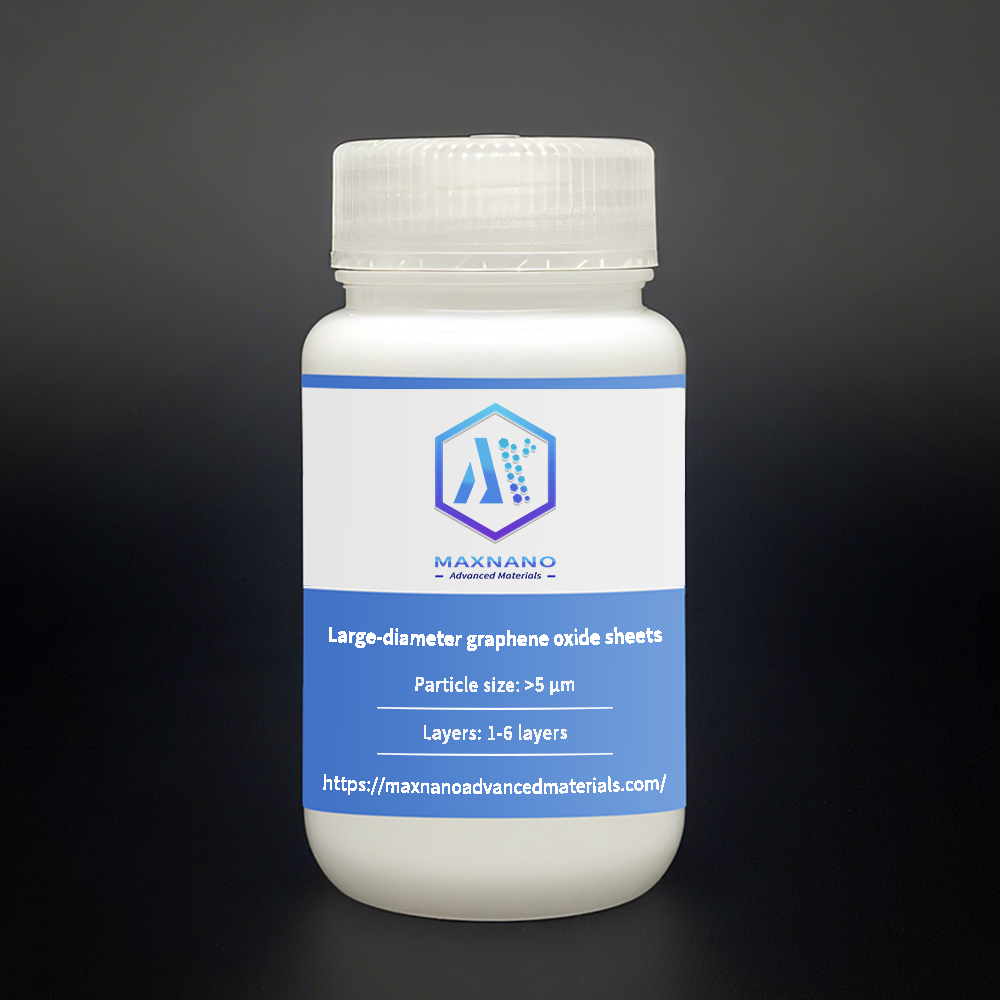
Graphene oxide (GO) is an oxidized form of graphite that serves as a key precursor in graphene production. Initially discovered in 1859 by Benjamin Brodie, this two-dimensional nanomaterial consists of single to few atomic layers containing both sp² and sp³ hybridized carbon atoms. Its surface is rich in oxygen functional groups—such as hydroxyl, carboxyl, and epoxy groups—which provide high hydrophilicity and excellent water dispersibility.
Specifications
Key Features
-
Large Flake Size: Diameters exceeding 5 μm provide higher loading capacity and improved electrical and mechanical performance in composites.
-
Excellent Dispersion: Stable in water and various solvents, facilitating easy mixing and processing.
-
Rich Surface Chemistry: Oxygen-containing groups allow straightforward chemical modification and functionalization.
-
Abundant Active Sites: High density of reactive sites supports strong interactions with polymers, metals, and biomolecules.
-
Tunable Properties: Optical and electrical characteristics can be adjusted via reduction, chemical doping, or functional group engineering.
Applications
-
Electronics: Base material for field-effect transistors, flexible sensors, biosensors, and conductive films.
-
Energy Storage: Electrode component in lithium-ion batteries and supercapacitors for enhanced capacity and charge/discharge performance.
-
Biomedicine: Drug carrier for targeted cancer therapy and scaffold material in tissue engineering.
-
Environmental Materials: Used in composite filters and catalysts for air purification and pollutant conversion.
-
Polymer Composites: Reinforcing filler in polyurethane, polystyrene, PLA, PP, and PMMA foams to improve mechanical and functional properties.
-
Optical Sensing: Serves as a fluorescence quencher in FRET-based biosensors.
Usage Guidelines
-
Avoid prolonged ultrasonication to prevent sheet fragmentation.
-
Store in a dark, dry environment at temperatures below 20°C.
-
Solid dispersions should be processed under temperature control (<20°C).
-
Unopened shelf life: 6 months.
Contact Us
For product details or custom requirements, please contact:
sales@maxnanotech.com

Reviews
There are no reviews yet.